Sports & Gym Towels vs Beach Towels: Spec Differences Buyers Miss
Most “towel comparisons” are fluff. I’m going to pin the gym towel vs beach towel debate to specs—size, GSM, fabric geometry, and the compliance traps that quietly cost buyers money.
Specs are politics. If you’re searching gym towel vs beach towel, you’re not really asking about where you’ll use it—you’re asking why two rectangles of fabric can behave like entirely different products once sweat, sand, heat, detergent, and repeated laundering hit them, and why brands keep hiding those differences behind one lazy word: “premium.” So what are they not telling you?
Here’s my hard truth: most buyers don’t get burned on “material.” They get burned on construction and tolerance—the boring, invoice-grade details that determine whether your towel dries in 30 minutes or stinks by Day 3.
Table of Contents
The buyer’s blind spot: “Towel” isn’t a category, it’s a performance spec
A workout towel vs beach towel is basically a trade: wicking + speed versus coverage + comfort.
Gym towels live in enclosed, humid, shared environments. Sweat is saline. Equipment is dirty. You re-use the towel within the same session. That drives specs toward fast dry, low bulk, controlled lint, and high abrasion resistance.
Beach towels live in sunlight, wind, sand, saltwater, and “lounging.” Nobody’s wiping a barbell knurl with a plush cabana towel unless they enjoy mildew.
If you want to see how manufacturers split the product line when they’re forced to be explicit, look at how Sports & Gym Towels are separated from beach-focused categories on the same catalog: custom sports & gym towels.
Spec difference 1: Surface geometry (loops vs flat) decides everything
Three words: loops trap grit.
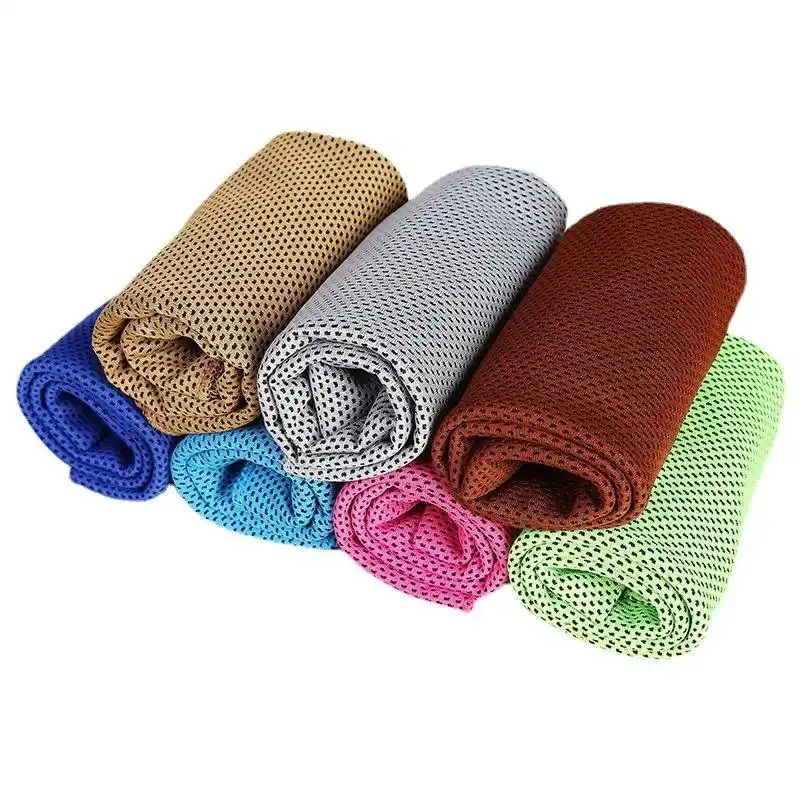
Cotton terry is looped—great for absorption, also great for grabbing sand, sunscreen residue, and gym funk. A sand resistant beach towel usually isn’t “special sand tech.” It’s often just a flatter face (microfiber suede, sheared velour, tight waffle) that gives sand fewer places to lodge.
Microfiber suede is typically polyester (PET), chemically a repeating chain like (C₁₀H₈O₄)ₙ; it’s flat, dense, and shake-clean most of the time. But static + oils can make grains cling like they paid rent.
Spec difference 2: GSM is abused (and buyers let it happen)
GSM (grams per square meter) is sold like a guarantee. It isn’t.
I’ve watched buyers overpay for “heavyweight” towels that were just heavier because of sloppy yarn choice, bad finishing, or moisture retention—not because the towel actually performed better.
Here’s a more honest towel GSM thickness comparison (typical ranges, not commandments):
Small sentence: benches exist. A gym towel size guide should start with the object you’re covering (bench pad, mat, machine backrest), then the fold pattern you’ll use, then whether you need a second towel for shower/sauna—because “one towel for everything” is how bacteria gets a frequent-flyer account. And honestly—why do so many gym-goers still bring a hand towel and call it a day?
Practical sizing (common retail/program sizes):
Gym: 40×80 cm (16×32″), 50×100 cm (20×40″)
Beach: 70×140 cm (28×55″), 80×160 cm (32×63″), 100×180 cm (40×71″)
Gym towels go smaller because laundry volume matters and drying speed matters more. Beach towels go bigger because body coverage and lounging comfort matters more than “packs small.”
Spec difference 4: Print method quietly dictates your fabric choice
If you want loud graphics, microfiber is a billboard.
Sublimation loves polyester. Cotton fights it. Cotton printing can look great, but you’ll be debating reactive dyes, pigment prints, colorfastness, and hand-feel trade-offs.
This is why catalogs often separate microfiber beach towels for quick-dry + high-saturation graphics from cotton beach towels for plushness and classic resort feel:
Spec difference 5: “Anti-odor” claims are a legal and technical minefield
This is where I get opinionated.
If a towel is marketed as antimicrobial, odor-killing, bacteria-fighting—buyers should treat that like a contract clause, not a fun feature. In the U.S., pesticide-related claims can trigger regulatory requirements and wording constraints; brands that get sloppy here invite pain later. The U.S. EPA’s guidance on treated consumer products is not subtle about claims needing to be qualified and limited.
Now layer in the chemical anxiety cycle: PFAS scrutiny is mainstream and expensive. In June 2023, Reuters covered ’s $10.3B PFAS settlement with U.S. public water systems—money tied to testing and treatment over 13 years. That’s not a towel story, but it’s the backdrop to every “stain resistant / forever clean / water repellent” textile claim. Reuters on the 3M PFAS settlement.
And in April 2024, the U.S. EPA finalized national drinking water limits for multiple PFAS, including enforceable MCLs of 4.0 parts per trillion for PFOA and PFOS—a number that tells you where the policy temperature is headed. EPA technical overview of the PFAS drinking water rule.
People argue cotton vs microfiber like it’s a vibe choice. It’s not.
Microfiber towels can shed microfibers into wastewater during washing. A Columbia-affiliated research write-up in April 2024 states that a three-pound laundry load can shed hundreds of thousands of microfibers, framing laundry as a major source of microplastic fibers in waterways. That matters if you’re selling microfiber at scale and trying to sound environmentally clean while doing it. Columbia researchers on laundry microfiber pollution.
So yes, microfiber gym towel quick dry can be fantastic. But if you’re going to make sustainability claims, you need documentation, careful language, and a willingness to avoid fantasy marketing. The site’s own sustainability positioning leans into certification pathways like OEKO-TEX®/GOTS/GRS—useful, if you don’t oversell what they mean: sustainable towel manufacturing documentation.
Flat-face builds shed sand better than looped terry
Print reality
Logos small, durability-first
Big graphics: microfiber + sublimation wins
Buyer trap
Odor/“antimicrobial” claims + lint + slow dry
“Sand-free” hype + heavy towels that never dry
What I’d sanity-check
Dry time, seam strength, shrinkage tolerance
Face construction, colorfastness, plush vs packable
FAQs
What’s the real difference in a gym towel vs beach towel?
A gym towel is a compact, fast-drying towel engineered for sweat management and frequent washing in shared indoor spaces, while a beach towel is a larger, comfort-first towel built for coverage, lounging, and a softer hand-feel—often with different GSM, surface geometry, and printing priorities. If you ignore that, you buy the wrong fabric and then blame “quality” when it’s really spec mismatch.
What size towel should I bring to the gym?
A gym towel size is the smallest rectangle that reliably covers the equipment contact area and absorbs sweat without staying wet, typically 40×80 cm (16×32″) or 50×100 cm (20×40″), chosen based on bench/mat dimensions and how often you can swap towels mid-session. If you do a lot of bench work, 50×100 cm is the boring winner. If you’re mostly wiping machines and your face/neck, 40×80 cm is fine.
Is microfiber gym towel quick dry actually better than cotton?
A microfiber gym towel quick dry is usually “better” when speed, packability, and low lint matter, because polyester-based microfiber sheds water and dries faster, whereas cotton terry tends to feel nicer and absorb more but can stay damp longer and hold odor if laundering is inconsistent. If you train twice a day or commute with your towel in a bag, microfiber is hard to beat. If you hate the synthetic hand-feel, go cotton—but don’t cheap out on weave density.
What does GSM mean for towels, and what range should I look for?
GSM is fabric weight per square meter and acts as a rough proxy for thickness and plushness, but it does not guarantee absorbency, durability, or drying speed because yarn type, loop structure, finishing, and moisture retention change performance even at the same GSM across factories and batches. For gyms: 200–320 GSM microfiber or 350–450 GSM cotton is a sane starting band. For beaches: 400–600 GSM cotton feels “resort,” while 180–260 GSM microfiber suede is packable and sand-shedding.
Do sand resistant beach towels really work?
A sand resistant beach towel is typically a towel whose face construction reduces sand adhesion—often a flat microfiber suede or sheared surface—so sand sits more on top and shakes off easier than looped cotton terry, but it does not eliminate sand and can still cling when static, sunscreen oils, and humidity interact. If your priority is “shake-clean,” go flatter. If your priority is “plush nap,” accept that sand will move in.
Conclusion
If you’re buying for a program (gym chain, resort, promo run) and you want fewer surprises, stop shopping by adjectives and start shopping by tolerances. I’d begin by skimming the spec direction on custom sports & gym towels, then cross-check what you think you want against the beach-side constructions in the microfiber beach towels lineup and cotton beach towel options.
When you’re ready to put numbers on it—size, GSM, construction, labels, packaging, timeline—send the brief and force a real quote path: request a towel quote or sampling guidance.