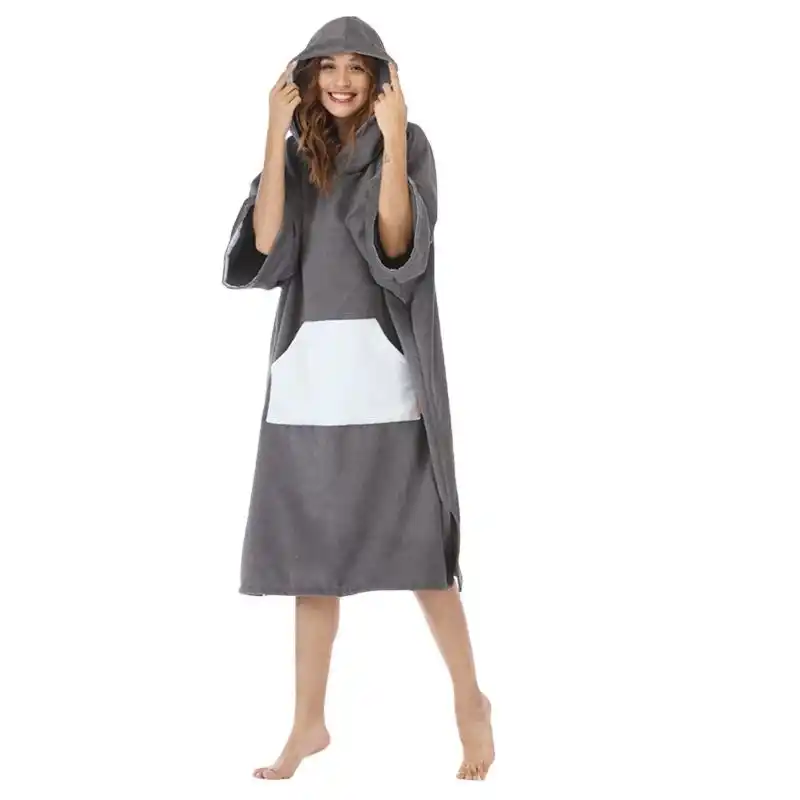
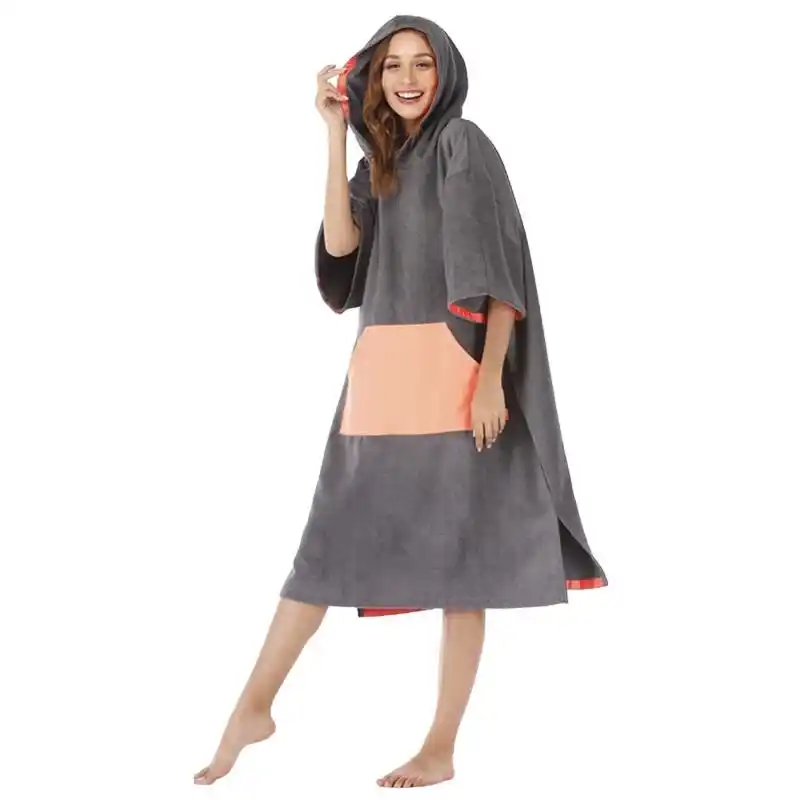
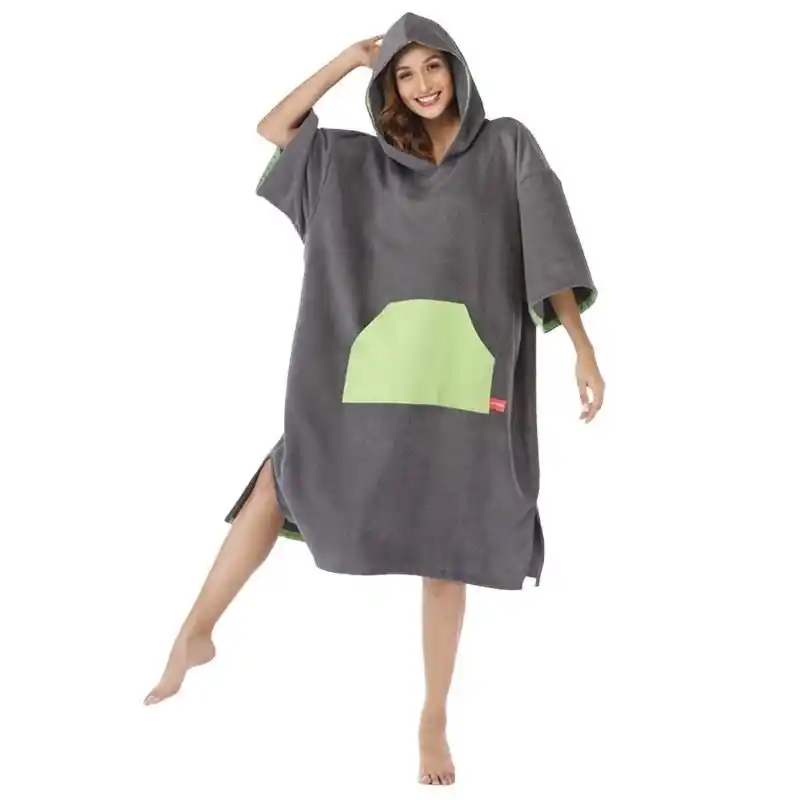
Adult Hooded Beach Towels: Best Specs for Resort Shops & Gift Sets
Resort buyers don’t lose money on towels because they “picked the wrong color.” They lose money because they bought the wrong spec, ignored packaging physics, and got blindsided by compliance and sourcing risk.
Because the hooded-towel category is secretly two product categories duct-taped together—towel + wearable—and that means your “cute gift shop add-on” can turn into shrinkage, returns, and awkward email threads about labeling, dye bleed, or why the hood sits like a traffic cone on half your guests.
So what do I recommend, when you’re buying an adult hooded beach towel for a resort shop wall or building a gift set that has to look premium at the unboxing and survive weekly laundry rotation? I recommend you stop shopping by vibes and start shopping by tolerances, surface finish, and pack-out discipline—exactly the stuff factories highlight on pages like private label OEM/ODM services for beach towels while most buyers keep asking for “soft” like it’s a measurable unit.
And yes, I’m going to say the quiet part: most “oversized hooded beach towel” listings are under-built—not because suppliers are evil, but because buyers keep rewarding the lowest quote and then acting shocked when a “wearable hooded towel for adults” behaves like a thin promo towel with sleeves.
Table of Contents
What buyers are actually searching for (and why it matters)
In plain terms: this query smells like commercial intent wearing an informational mask. People want specs, comparisons, and “best” guidance, because they’re either (a) sourcing wholesale hooded beach towels or (b) trying to justify a higher retail price with real, defensible build quality.
Which is you, right?
The resort-shop “good / better / best” spec ladder (the part vendors won’t force you to pick)
Let’s get concrete. Adult bodies are not one-size. Neither are resort use cases.
Here’s the ladder I see work in the real world, tied to what sells and what survives:
1 Sizing (the “What size hooded beach towel is best for adults?” reality)
If you’re selling to adults, I treat 100 × 180 cm (about 39 × 71 in) as a safe retail baseline. If you want that “robe-like” drape guests will pay for, go 110 × 200 cm (about 43 × 79 in) and don’t apologize for it—your margin likes the bigger canvas. Pocket poncho styles can run shorter in body length but wider in wrap.
Want a dirty trick? The hood opening. Too tight and you get complaints. Too wide and it slides back constantly. I target 30–34 cm opening width with a 35–40 cm hood depth for adult heads + wet hair, then demand a tolerance (±1 cm) in the spec sheet so production doesn’t freestyle it.
If you’re browsing adult hooded / poncho towel series, you’ll notice even the quote forms push “Size & GSM” up front—because that’s where outcomes start.
2 GSM (weight) — where “premium” becomes measurable
280–330 GSM: “doesn’t feel like a plastic flag” tier
Hard truth: if your resort shop sells at premium price points, sub-380 GSM cotton terry gets touched, then put back. Guests can feel thinness instantly.
3 Fabric face: terry vs velour vs “hybrid”
This is where buyers accidentally buy the wrong product.
Terry both sides: best for absorbency and laundry, looks more utilitarian. Great for pool operations, less “giftable.”
Velour face + terry back: the retail cheat code. Velour looks expensive, prints clean, photographs well, and still absorbs because the back is terry. It’s the same logic you see on products like a “premium soft touch” velour hooded towel—smooth face for presentation, thirsty loops underneath for function.
Microfiber: quick dry, lightweight, packs small, but you’re selling performance not luxury. If you try to price microfiber like cotton velour in a resort boutique, guests call you out with their wallet.
Construction details that decide whether guests love it or hate it
Three words: seams, hood, edges.
Now the longer version, because this is where returns come from: if the side seams are overlocked with weak thread, if the hood seam isn’t reinforced, and if the hem folds are inconsistent, the towel twists after wash, the hood pulls, and your “adult beach towel hoodie” starts looking like a misshapen costume after 6–10 laundry cycles—exactly when the guest decides it wasn’t “worth it.” Want that review? Probably not.
My non-negotiables (yes, even for wholesale)
Double-needle coverstitch or reinforced seam on stress zones (hood join, side seams)
Hem width: 2.5–3.5 cm for cotton; clean corners (no bulging “dog ears”)
Shrinkage target: set it (example: ≤5% length/width after wash) and test it on the pre-production sample
Colorfastness expectations: especially for navy/black—resort shops love dark colors, laundry hates them
Pocket option? Great. But only if the pocket is bartacked at corners and the opening doesn’t gape. The “front pocket” style is popular because it’s practical (phone, room key, sunglasses), but it needs real reinforcement or it becomes a tear point.
Branding: embroidery vs print (and why resorts should stop defaulting to embroidery)
I like embroidery. I also think it’s overused.
Custom embroidered/logo hooded beach towels work when:
your logo is simple
you want a crest vibe
you can control placement and stitch density
But embroidery becomes a problem when buyers insist on tiny details and gradients. Digitizing turns your logo into thread math, not brand fantasy. If you want “Instagram clean,” a velour face with high-quality print can look sharper than a stitched logo, especially at distance.
If you’re building a crest-heavy program, your starting point should be something like custom embroidered beach towels—and then you push for sample approvals that match how the item will actually be sold (folded, banded, and lit by harsh retail spotlights).
Gift sets: packaging is not decoration, it’s logistics
Gift sets fail in two ways:
They look cheap.
They arrive damaged.
A gift set is a system: towel + insert + label + barcode + carton marks + pack-out rules. That’s why serious suppliers keep repeating the boring stuff—packing accuracy, labels, barcodes, carton marks—because one mistake means your warehouse (or resort receiving dock) loses an afternoon.
Here’s the controversial opinion: kraft wrap only works if your towel is visually perfect. Any weave flaw, any linting, any color mismatch becomes visible because you’ve basically put the product on stage with a paper belt.
Compliance and sourcing risk: the stuff that turns “simple towels” into a problem
Let’s talk about the ugly, not the aesthetic.
1 PFAS scrutiny is rising (and textiles are part of the story)
The U.S. Geological Survey estimated that at least 45% of U.S. tap water could contain one or more PFAS compounds, based on a national study—PFAS being a class of “forever chemicals” with thousands of variants. That’s not a towel statistic, but it’s the context: consumers, regulators, and attorneys are paying attention. USGS PFAS tap water study (July 5, 2023).
If you’re selling water-repellent “finishes” on wearable towels, you should know what you’re implying. PFAS examples include PFOA (C₈HF₁₅O₂) and PFOS (C₈HF₁₇O₃S)—names that keep showing up in regulatory action.
And in April 2024, Reuters reported the U.S. Environmental Protection Agency finalized a rule designating PFOA and PFOS as hazardous substances under Superfund (CERCLA)—a legal shift that increases liability pressure across supply chains. Reuters coverage of EPA’s PFAS Superfund rule (April 19, 2024).
Do I think your hooded towel is a Superfund site? No. Do I think marketing “chemical coatings” gets riskier every year? Absolutely.
2 Forced labor enforcement hits textiles (and you don’t want your shipment stuck)
If you buy cotton terry, you’re buying a commodity supply chain with enforcement risk.
If you’re a resort buyer reading this and thinking “that’s procurement’s problem,” I’ll be blunt: when towels miss the season, retail loses the season. Your shelf doesn’t get a rain check.
3 Labeling: stop winging fiber content and origin claims
The Federal Trade Commission literally publishes a plain-English handbook on labeling under the Textile and Wool Acts (fiber content, country of origin, manufacturer/dealer identity). If your “adult hooded beach towel” is treated like a textile product and you’re selling it in the U.S., this is not optional reading. FTC handbook via GovInfo PDF.
Also: if your hooded towel poncho for adults is marketed as wearable apparel-like coverage, you should at least be aware of flammability rules for clothing textiles and how regulators describe scope. eCFR 16 CFR Part 1610.
Comparison table: specs that fit the channel (not your mood board)
Channel / Use Case
Recommended Fabric
Size (cm / in)
GSM Target
Hood + Features
Branding Best Bet
Packaging
What You’re Optimizing For
Resort gift shop “premium”
Velour face + terry back
110×200 / 43×79
420–500
Deep hood, clean hem
Print on velour or simple crest embroidery
Kraft wrap or belly band
Shelf appeal + perceived luxury
Resort ops / pool rotation
Terry both sides
100×180 / 39×71
400–480
Reinforced hood seam
Small embroidery or woven label
Bulk carton, minimal
Durability + absorbency
Gift set / VIP welcome
Velour + terry or high-grade terry
110×200 / 43×79
450–550
Optional pocket
Monogram + hangtag story
Rigid box + insert
Unboxing + keepsake value
Surf / changing poncho adult
Microfiber or terry poncho
Wide wrap, shorter body
260–330 (MF) / 400+ (terry)
Pocket, side slits
Print + label
Polybag + insert card
Quick change + packability
Promo / event bulk
Cotton/poly blend or light terry
90×170 / 35×67
320–380
Simple hood
Print
Polybag
Cost control
If you want matching SKUs across your property, it’s smart to align your hooded program with your broader resort & hotel towel assortment so branding and color standards don’t drift season to season.
FAQs
What size hooded beach towel is best for adults?
A best-fit adult hooded beach towel size is typically a body length in the 100×180 cm to 110×200 cm range (about 39×71 to 43×79 inches), paired with a hood opening that doesn’t choke wet hair and a cut that wraps the torso without gapping when walking. After that, dial it to your guest profile: spa lounging skews longer; surf/changing ponchos skew wider.
What is a hooded towel poncho for adults?
A hooded towel poncho for adults is a wearable towel garment that combines an attached hood with a poncho-style body, designed to provide hands-free coverage while drying off, changing, or moving between pool, spa, and beach areas, often incorporating pockets or side openings for function and modesty. If it’s being sold as wearable, treat labeling and performance specs more seriously than a flat towel.
What GSM should a resort gift shop target for an adult beach towel hoodie?
A resort-ready adult beach towel hoodie GSM target usually sits between 420 and 500 GSM for cotton/velour builds, because that range creates immediate “plush” handfeel at point-of-touch while still drying in a reasonable time and holding shape after repeated laundering, which supports higher retail pricing without backlash. Below ~380 GSM, you risk the “thin towel” perception and lower conversion.
Are custom embroidered/logo hooded beach towels always better than printed?
Custom embroidered/logo hooded beach towels are not automatically “better” because embroidery excels at simple marks and crest aesthetics but can distort fine detail, add stiffness, and cost more per unit, while high-quality printing on a velour face can look cleaner at distance, photograph better for e-commerce, and keep the product softer. Pick the method that matches the logo complexity and viewing distance.
How do I package wearable hooded towels for gift sets without damage?
Gift-set packaging for wearable hooded towels is a protective system that combines fold specification, abrasion control, moisture barriers, and retail identifiers so the towel arrives clean, shaped, and sellable, typically using a presentation box, polybag with insert card, or kraft wrap with consistent pack-out rules and carton marking discipline. If you ship boxed sets, test drop/edge crush early—boxes fail quietly until they don’t.
What’s the biggest compliance risk buyers ignore when sourcing wholesale hooded beach towels?
The biggest ignored compliance risk in wholesale hooded beach towels is supply-chain and claims exposure—forced-labor enforcement can detain shipments, and chemical/finish claims (including PFAS-adjacent messaging) can create reputational and legal headaches—so documentation, material transparency, and conservative marketing language matter as much as stitching. Read your own hangtags like an attorney would.