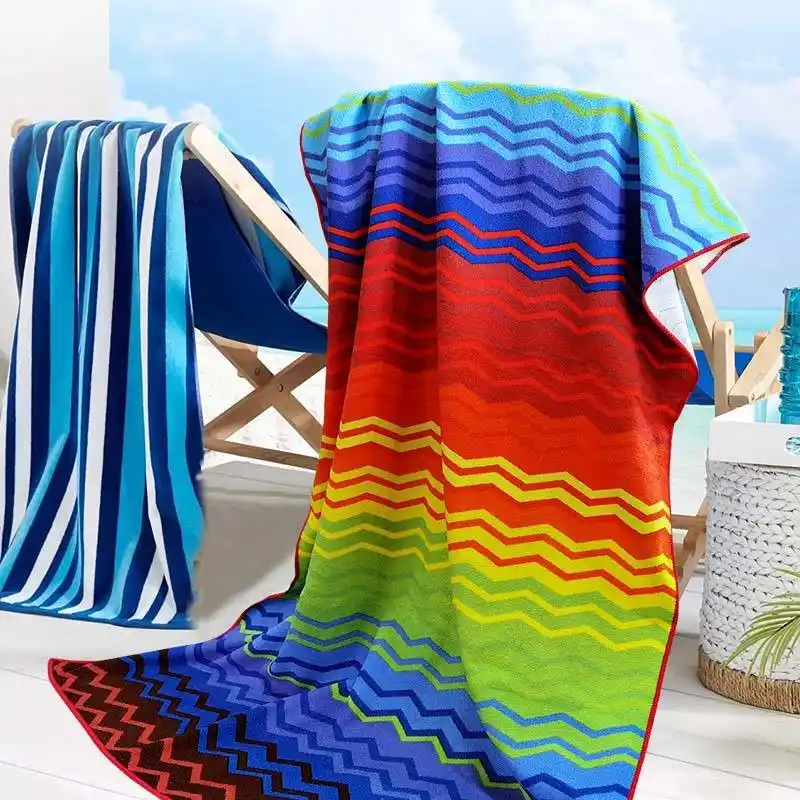
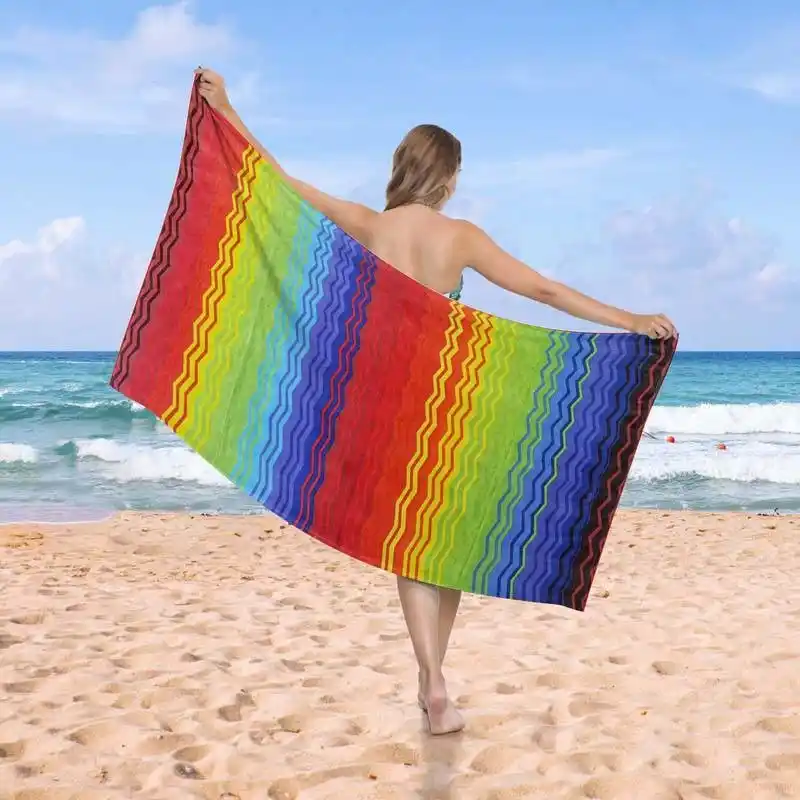
Blended Fabric Beach Towels: When Poly/Cotton Mix Makes Sense
Poly/cotton towels exist for reasons brands rarely say out loud: cost control, print performance, and fewer returns. Here’s when a polycotton beach towel is the smart play—and when it’s a mistake.
Blends aren’t magic. They’re a negotiated settlement between physics (absorbency), chemistry (dyes + polymers), and buyer economics (shrink, returns, freight, replacement cycles), and the poly/cotton mix is basically the industry’s “good enough” fabric—until you ask it to do one job perfectly. So what actually makes a cotton–poly blend towel worth ordering?
I’m going to say the quiet part loud: a cotton polyester beach towel usually isn’t chosen because it feels better. It’s chosen because it behaves better—on spreadsheets, in warehouses, and in commercial laundry.
Table of Contents
What a poly/cotton towel really is (and why ratios matter)
Cotton is cellulose, roughly (C6H10O5)n. Polyester in towels is typically PET, (C10H8O4)n. Same “towel” category, totally different behavior in water, heat, and abrasion.
Most polycotton beach towel programs land in familiar ratios: 80/20, 70/30, 60/40 (cotton/poly). Here’s the hard truth: every step away from 100% cotton usually trades peak absorbency for dimensional stability (less shrink), faster dry time, and higher resilience under repeated wash + tumble.
And if your program involves printing? Polyester becomes the enabler, not the villain.
The print-and-performance trap nobody warns you about
If your design plan is high-saturation, photo-like art (common for promo, souvenir, resort retail), you’ll run into a limitation: cotton can look great, but it’s less forgiving across mass production runs when you’re pushing vivid color + tight tolerances.
Polyester-heavy surfaces work well with sublimation-style workflows (the dye becomes part of the polymer). That’s why blended and “hybrid-feel” constructions keep showing up in print-forward catalogs—and why buyers looking for durable beach towel fabric keep circling back to blends.
“Best beach towel material” depends on how it gets abused
Here’s my rule: don’t ask “best.” Ask “best for the failure mode I’m trying to avoid.”
Cotton fails when it shrinks, loses shape, holds moisture too long, or looks tired after heavy laundering. Polyester fails when it feels plasticky, traps odor, and—yes—feeds the microfiber problem if you don’t design and wash smart.
And that microfiber issue is not a theory-class debate. Researchers keep pointing to laundry as a major pathway for fiber pollution; Columbia University summarized current work and why it matters in April 2024. Read: Plugging the Leak on Laundry Pollution.
So when does a cotton–poly blend make sense?
1 High-turnover hospitality and pool programs
If towels are getting hammered—daily wash cycles, bleach exposure, industrial dryers—your priority shifts to survival: fewer replacements, fewer complaints, fewer “why did this shrink” emails. That’s where “blend terry” exists.
If your audience is hotels and operators, this aligns naturally with resort and hotel towel program specs (where repeatability matters more than boutique softness).
2 Print-heavy retail where returns kill margin
Returns often come from mismatch: the photo looked bold online, but the delivered towel looked muted or uneven. Polyester content can make color workflows more predictable—especially if your QA is built around repeatable washfastness tests (think AATCC TM61 / ISO 105-C06 targets rather than vibes).
3 Supply-chain volatility and budgeting reality
Cotton pricing and availability swing. In February 2024, U.S. Department of Agriculture projected the Cotlook A Index to average 97.5 cents per pound in its cotton outlook—exactly the kind of number procurement teams watch when deciding whether a blend helps stabilize unit cost.
And in late 2024, USDA’s Cotton: World Markets and Trade discussed how expanded polyester capacity and its lower relative price shape textile competitiveness—translation: polyester keeps winning the price argument.
4 Compliance and labeling risk (yes, this matters in towels)
If you’re selling in the U.S., fiber percentages aren’t marketing poetry—you’re expected to label them properly. Federal Trade Commission rules and guidance cover fiber content disclosure and tolerances. If your towel is 70/30, don’t “round it into” a claim you can’t defend.
And if you’re making environmental claims (recycled, “eco,” etc.), the FTC has been actively reviewing green marketing standards, including workshops on “recyclable” claims. Over-claiming is how brands buy themselves headaches.
Durable beach towel fabric for repeat wash + branded programs
60/40 cotton/poly (print-forward blend)
Medium
Fast
High
Very high
Promo + retail art towels; fewer color surprises
If you’re unsure, compare the blend logic against the extremes: microfiber beach towels for quick-dry positioning versus cotton-first programs. The “right” answer usually shows up when you decide what you’re optimizing: feel, dry time, or lifecycle cost.
The packaging detail everyone under-budgets
I’ll be blunt: the towel can be perfect and still fail at retail because packaging is sloppy—creases, lint, barcode placement, inserts, hangtags, polybags that fog the presentation.
And if you’re making sustainability claims, don’t do it with vibes. Build it with documentation—OEKO-TEX®, GOTS, GRS—then say only what you can prove. The site’s sustainability and certification overview is the right direction of travel.
FAQs
Are polycotton beach towels good for the beach?
A polycotton beach towel is a cotton-and-polyester blended towel (often 60/40 to 80/20) designed to balance cotton’s absorbency with polyester’s faster drying and shape stability, making it practical for beach use when you want fewer shrink issues and better durability than pure cotton. They’re especially solid for branded resort retail and high-turnover programs where “good feel + fewer replacements” beats “maximum plush.”
Cotton vs polyester beach towels: what’s the real difference?
Cotton vs polyester beach towels is a material trade-off where cotton (cellulose) prioritizes absorbency and a natural hand-feel, while polyester (PET) prioritizes quick drying, print saturation, and resistance to shrink—often at the cost of a less “lux” feel and higher microfiber-shedding concerns when washed. If you sell prints, polyester wins; if you sell comfort, cotton wins; blends exist because buyers hate choosing.
What is the best beach towel material for quick-dry performance?
The best beach towel material for quick-dry performance is typically polyester microfiber, because its filament structure and lower water retention reduce drying time compared with looped cotton terry, especially in humid climates or travel use where towels get packed damp and odor becomes the enemy. If microfiber feels too slick, a cotton–poly blend can be a decent compromise.
When should I choose a cotton–poly blend towel instead of 100% cotton?
Choosing a cotton–poly blend towel makes sense when your program is exposed to frequent laundering, strict size tolerance needs, or print-heavy merchandising, because polyester boosts dimensional stability and can reduce shrink/warping that triggers returns and replacement costs over a season of use. Hospitality, promos, and “logo-forward” retail collections are the usual winners.
Does a polyester cotton blend beach towel shed microfibers?
A polyester cotton blend beach towel can shed microfibers because synthetic fibers can break off during washing and abrasion, and research continues to flag laundry as a meaningful pathway for microfiber release into waterways, especially when fabrics are stressed by heat, friction, and harsh detergents. Design choices (construction, finishing) and wash behavior matter more than most marketing admits.
Do I need to label fiber percentages on blended towels?
Fiber-percentage labeling is required for most textile fiber products sold in the U.S., meaning a blended towel should disclose the generic fiber names and percentages by weight (with allowed tolerances), along with other required identity/origin details, so “mostly cotton” language can’t replace accurate composition. If you can’t substantiate it, don’t print it on a hangtag.
Conclusion
If you’re building a program around blends—private label, resort retail, or promo—start by aligning on ratio (70/30 vs 60/40), construction (terry vs velour/sheared), and print method, then lock packaging and labeling early so you don’t lose weeks later. When you’re ready, use the contact page for sampling specs, QC checkpoints, and quote-path planning and show your target GSM, size, and artwork use-case up front.