Cotton vs Microfiber vs Recycled RPET Beach Towels: How Buyers Choose
Buyers don’t “pick a fabric.” They buy a bundle of trade-offs: margin, freight, print quality, and the legal risk of what you claim on the hangtag. Here’s how cotton, microfiber, and recycled rPET really win (or lose) in 2026 sourcing conversations.
Buyers are cynical. They’ll say they’re shopping for “handfeel” and “absorbency,” but the short list usually forms after they run the numbers on freight density, print method constraints (reactive vs sublimation), and how exposed they are if “eco” turns into a consumer-protection headache—especially now that “recyclable/recycled” marketing claims are being litigated like any other product promise. So what are they really choosing?
And why do so many brands pretend otherwise?
Here’s the hard truth I keep seeing in data, specs, and disputes: “Best beach towel material” isn’t a fabric. It’s a decision framework.
Table of Contents
The buyer’s real scorecard (what wins POs)
Three words: margin, merch, risk. A sourcing manager can love cotton terry at 500 GSM, but if the program is a 20,000-unit promo drop shipping by air (yes, brands still do this), that love dies fast; the PO drifts toward lighter microfiber, simpler pack-outs, fewer color surprises, and a cleaner story for e-commerce photos—because the system rewards predictability over poetry.
So—are you selling a towel, or selling an operation?
To make this practical, I’m going to talk like buyers talk: use case + channel + claim exposure.
Cotton: the “premium” default (until freight and drying time show up)
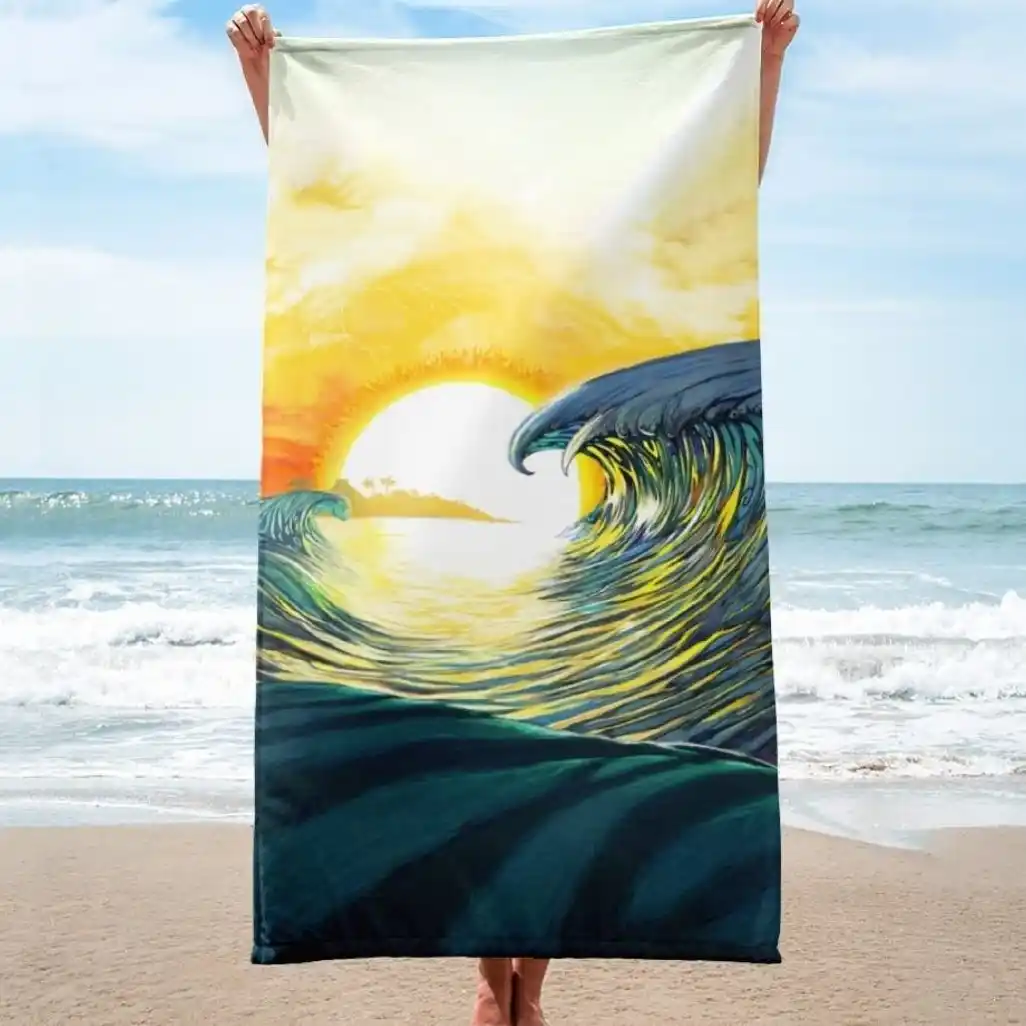
Cotton is cellulose, basically (C6H10O5)n. It absorbs, it feels familiar, and it photographs like “real quality.” That’s why resort and retail programs keep circling back to cotton when they want perceived value, heavier drape, and fewer consumer complaints about “plastic-y feel”—the exact logic behind many assortments built around custom cotton beach towels like the ones shown in the Cotton Beach Towels collection.
But. Cotton gets punished on dry time, bulk, and shipping cube; and if you’re not disciplined about spec (GSM, yarn count, pile height, shearing/velour finish), you’ll eat returns from “thin towel” expectations that were created by your own hero images.
My opinion: if your brand wants “premium,” cotton wins only if you control GSM and finishing, and you don’t lie with photography.
Microfiber: the logistics bully (light, fast-dry, sand shakes out)
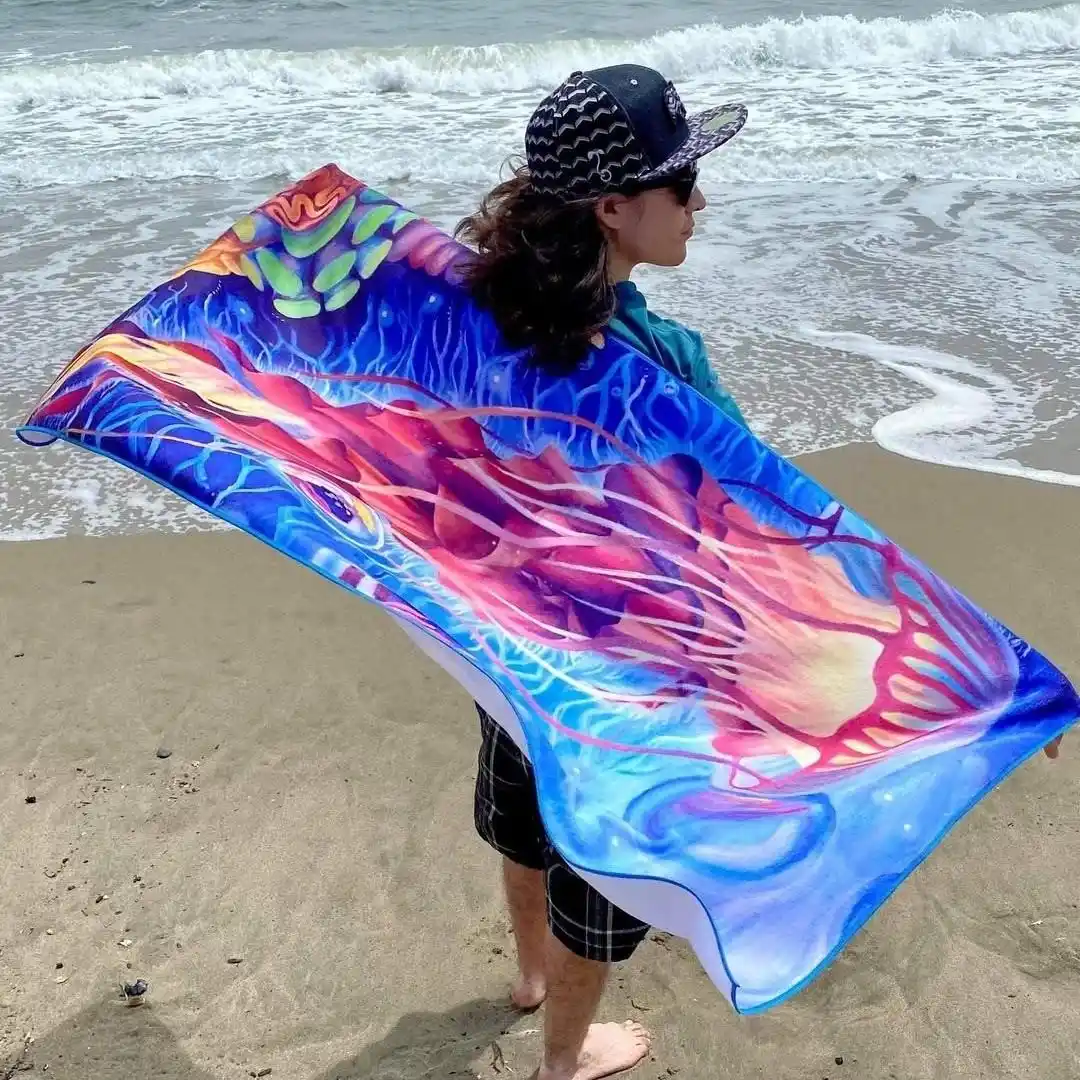
Microfiber towels are usually polyester (PET), (C10H8O4)n, often in suede/microsuede constructions that feel smooth and pack tiny. This is where sand-free quick-dry microfiber beach towel positioning comes from—travel, gym, surf, giveaway kits—where buyers want low freight, fast turnaround, and high-saturation prints via sublimation, like what’s featured in the Microfiber Beach Towels lineup and Printed Beach Towels that include sublimation microfiber examples.
Here’s the part brands whisper: microfiber is also a microplastic source pathway. The U.S. National Park Service bluntly describes laundering synthetic fabrics as a substantial source of microfibers (tiny polyester/acrylic threads), including releases from both washers and dryers. That’s not a vibe; that’s a compliance and reputation issue waiting to mature. Reducing Laundry Microfibers (NPS).
If you sell microfiber, act like an adult: include care guidance, consider capture solutions, and don’t market “eco” with jazz hands.
Recycled rPET: same polymer, different paperwork (and that’s the whole point)
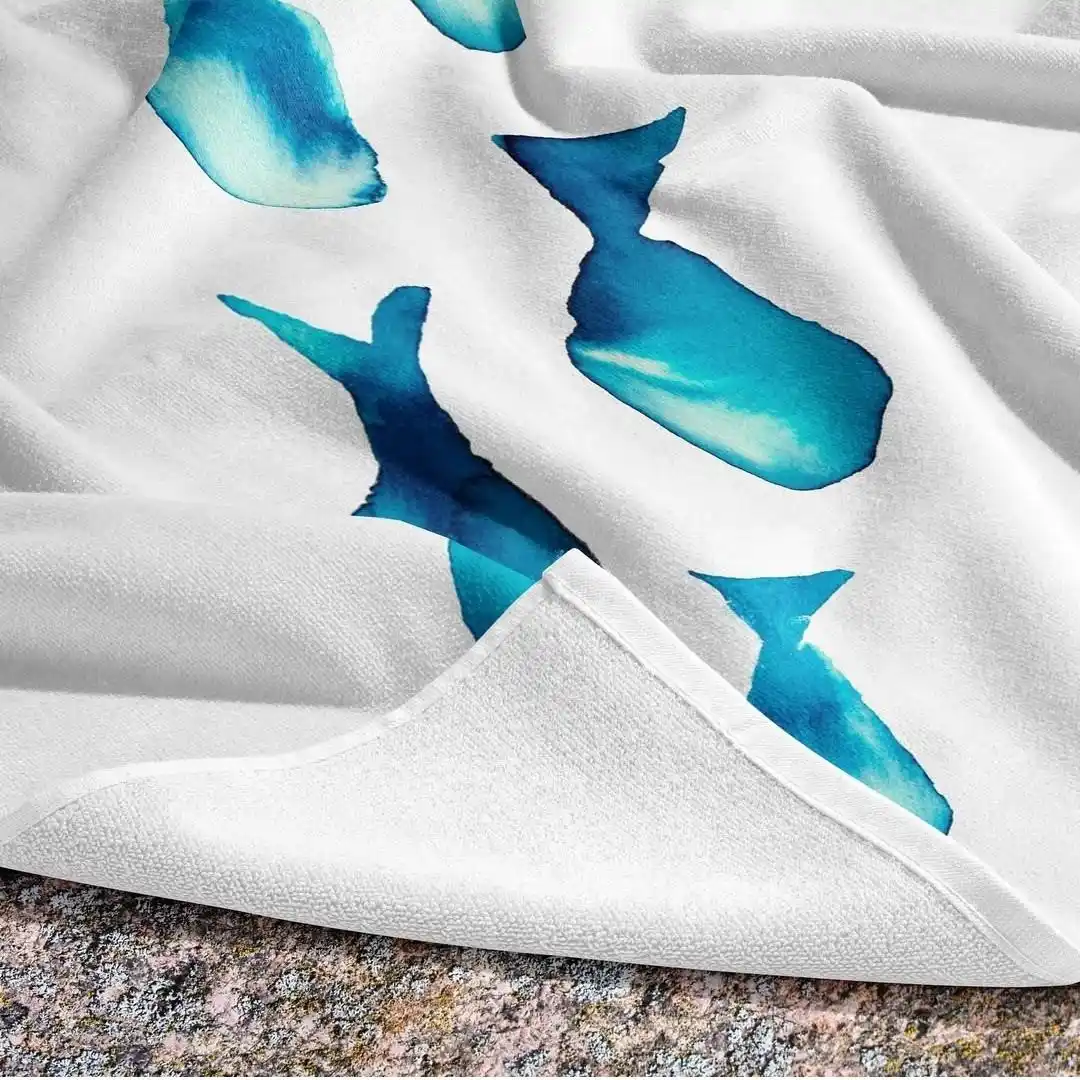
Recycled rPET is still PET—same backbone, different feedstock story. Buyers pick it when they need a sustainability narrative that’s legible at shelf and in bids (corporate gifting, certain EU/UK retail accounts, procurement questionnaires), and when they can document chain-of-custody—exactly why programs push toward traceable options like the Recycled RPET Beach Towels category and supplier documentation positioning on the Sustainability page.
Now the unpopular part. A lot of “eco-friendly beach towels” marketing is structurally fragile because it leans on broad claims consumers interpret as “this fixes plastic,” while the real world is moving toward legal scrutiny of recycling narratives. Reuters has covered multiple lawsuits attacking the plastics industry’s recycling claims—allegations that companies misled the public about what can actually be recycled. That litigation climate bleeds downstream into any product trying to ride recycled-content halo effects. Reuters: Consumers sue Exxon, Dow, others over plastic recycling claims (Dec 17, 2024).
So yes, rPET can be the right call. But only if your claims are narrow, specific, and document-backed.
The environmental asterisk buyers are starting to ask about
Two sentences. Microfibers are now a federal-policy topic, not just an NGO talking point; the EPA/NOAA interagency report frames microfiber exposure and calls for prevention and capture solutions across design, manufacturing, and laundering stages. EPA/NOAA: Microfibers are a Macro Issue (Oct 2024 PDF).
And biodegradability claims? Here’s your reality check: UC San Diego’s Scripps Institution of Oceanography reported field results where natural/wood-based cellulose fabrics degraded quickly, while plastic fabrics and plastic portions of blends showed no signs of degradation even after more than a year in the ocean environment. Scripps/UCSD study summary (May 24, 2023).
If you sell polyester—virgin, microfiber, or rPET—don’t pretend this conversation isn’t coming.
A buyer-facing cheat sheet (what to pick, depending on the program)
Material
Buyers say they want
What they actually optimize
Typical towel spec ranges (market norms)
Print reality
Risk flags
Cotton
Plush, absorbent, “premium”
Perceived value + lower complaint risk
~400–600 GSM terry/velour; larger pack volume
Reactive/pigment printing, jacquard, embroidery
Freight costs, dry time, shrink/bleed if spec is sloppy
Microfiber (PET)
Quick dry, sand-free, packable
Freight + bright art + speed
~180–300 GSM suede/microsuede
Sublimation wins for full-bleed color
Microfiber pollution scrutiny; “eco” claims get challenged
Recycled rPET
“Sustainable” without performance loss
Bid qualification + claims documentation
~200–350 GSM; similar to microfiber handfeel
Sublimation-friendly; storytelling via hangtags
Claim exposure if recycled content isn’t verifiable
Want to make that operational instead of theoretical? Buyers typically bundle material choice with packaging and proof requirements—think barcode accuracy, inserts, and pack-out logic—because a towel that arrives wrong is worse than a towel that isn’t perfect. That’s why programs often pair a material decision with OEM/ODM production workflow support and retail-ready custom packaging options (gift box vs polybag vs kraft wrap).
So how do buyers choose a beach towel material?
Three words again: channel tells truth. If it’s premium retail or resort, cotton stays in the conversation because consumers equate weight with value; if it’s travel/ecom and the brand is allergic to freight bills, microfiber dominates; if procurement demands sustainability proof, recycled rPET shows up—but only when documentation is clean enough to survive questions later.
Are you building a hero product—or a repeatable program?
Here’s the decision order I’d use if I were evaluating your line:
Are microfiber beach towels better than cotton? Microfiber beach towels are polyester-based fabrics engineered for fast drying, compact packing, and high-color sublimation printing, while cotton towels are cellulose-based loops designed for higher absorbency and a familiar plush feel; “better” depends on whether your priority is freight/dry-time efficiency or perceived-premium handfeel and traditional towel performance. If you’re selling travel, sports, or giveaways, microfiber often wins on operations. If you’re selling “hotel luxury,” cotton usually wins on perception.
How to choose a beach towel material for sand-free, quick-dry use? A sand-free quick-dry beach towel is typically a low-pile microfiber (PET) suede construction that reduces loop snagging, sheds sand more easily, and dries faster than thick terry, making it best when buyers prioritize portability, fast turnover between uses, and vivid full-bleed prints via sublimation over plush absorbency. Microfiber is the pragmatic pick here. Just don’t market it like it’s magically “green.”
What is a recycled rPET beach towel? A recycled rPET beach towel is a polyester towel made from recycled polyethylene terephthalate feedstock (often post-consumer bottles), using the same core polymer structure as virgin PET but positioned with sustainability claims that should be supported by chain-of-custody documentation (e.g., recycled-content tracking) to reduce the risk of misleading marketing. If you can’t prove the input, don’t oversell the outcome.
Are recycled polyester beach towels actually eco-friendly? Eco-friendly beach towels are products whose total impact is measurably lower across defined boundaries (materials, processing, logistics, and end-of-life), and recycled polyester can reduce reliance on virgin fossil inputs while still carrying microfiber and persistence concerns that require honest care guidance and careful, specific claims instead of broad “saves the ocean” messaging. “Eco” is not a fabric label. It’s an evidence problem.
Do microfiber towels shed microplastics? Microfiber shedding is the release of tiny synthetic fibers (often polyester/acrylic) from textiles during washing, wearing, and drying, and government sources describe laundering synthetic fabrics as a substantial pathway by which microfibers enter wastewater and the environment—meaning microfiber products should be paired with mitigation guidance rather than ignored. This is why care cards and filtration talk are becoming standard in serious programs.
What’s the safest way to market recycled content in towels? Marketing recycled-content towels safely means making narrow, verifiable claims about the product’s recycled content and documentation basis, avoiding sweeping “recyclable solves waste” implications, and ensuring your supplier paperwork can back up what your hangtags and PDP copy promise—because recycling claims are increasingly being challenged in court. If Legal wouldn’t sign it, don’t print it.
Conclusion
If you want a towel line that doesn’t collapse under freight math, print limits, or claim scrutiny, build from a spec—then lock the execution. Start with your material route (cotton, microfiber, or rPET), align the print method, and package it for your channel.