How to Compare Suppliers: Sample Scoring Rubric (Feel, Print, Stitch, Pack)
Most supplier “quality” claims are marketing. This scoring rubric turns towels into measurable proof—feel, print, stitch, pack—so you can pick winners and price risk.
Not literally—fabric can’t talk—but supplier quotes do, and the lie usually hides in the gap between “looks fine on day one” and “falls apart after wash #3,” which is exactly why a supplier scorecard template has to force proof, weights, and penalties instead of vibes and friendly WhatsApp voice notes.
So what are we actually buying: a towel, or a future problem?
I’m going to be blunt: the “best” supplier is the one who survives contact with your worst customer, your strictest retailer, and your least-forgiving inbound warehouse. That’s not romance. That’s math.
And the math got nastier in 2023–2024: regulators and logistics turned “supplier risk” into a billable line item. U.S. safety regulators have continued issuing textile-related recalls where the failure mode isn’t subtle—it’s flammability and burn hazard, with real unit counts and real retail prices attached. One 2024 CPSC recall expansion for children’s terry cloth robes cites flammability violations and lists pricing at $20–$27, plus about 5,000 units—the kind of headline that doesn’t care how pretty your embroidery looks. CPSC recall notice
Then there’s shipping. In January 2024, Reuters reported spot-rate spikes tied to Red Sea disruption—$3,103 per 20-foot container Shanghai–Europe and $3,974 per 40-foot to the U.S. West Coast (week-on-week jump cited). That’s not trivia; it changes what “pack” means, because bad packing becomes damage, claims, and rework when freight is already punishing you. Reuters on container rate spikes
And compliance enforcement isn’t theoretical either. Reuters’ legal reporting in 2024 tied forced-labor enforcement to detained shipment values in the billions—meaning your supplier comparison can’t stop at stitch density; you need documentation discipline or you’re gambling with a port hold. Reuters on enforcement and detentions
Now, the rubric.
If you’re sourcing towels in any meaningful volume—retail, resort, promo—you want a supplier selection matrix that punishes suppliers who are “great at samples” but sloppy at repeatability. If you’re building programs similar to what you see across cotton towel lines and printed towel production, you’ll also want to compare like-for-like on materials and processes (cotton terry vs microfiber, reactive dye vs pigment print, jacquard vs print). For product context, see cotton beach towel options and printed beach towel production.
Table of Contents
The hard truth about scoring suppliers
A supplier scoring rubric is only as honest as its penalties.
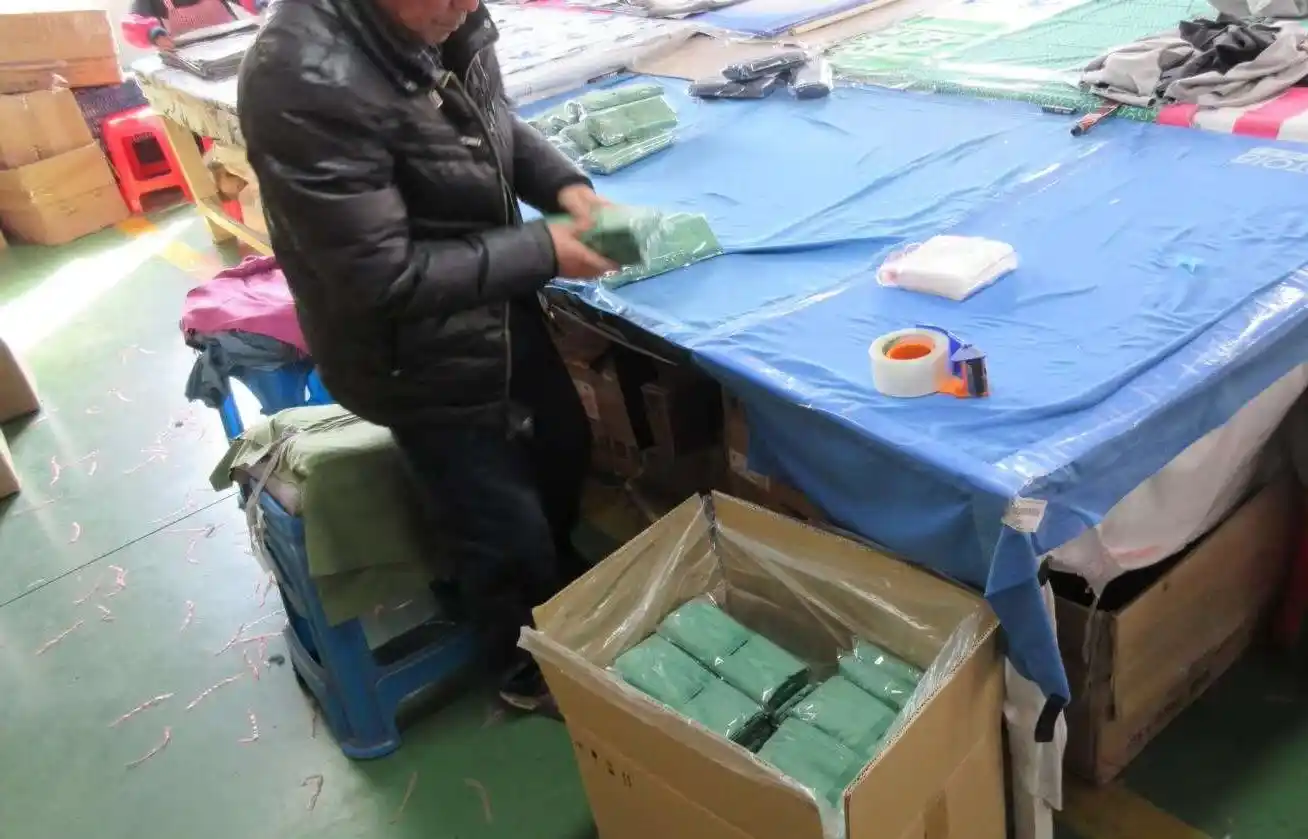
If “Pack” is worth 10 points, everyone passes—because everyone can throw towels in polybags. But if “Pack” includes barcode readability, carton marks, SKU accuracy, and damage prevention, suddenly the supplier who “never makes mistakes” starts making them… on paper.
If you’re building a private label or bulk program, it’s reasonable to expect a supplier to handle packaging, labels, and barcode/carton mark execution as part of production readiness; some factories explicitly pitch this as a core capability. That matters because your warehouse doesn’t grade effort—it grades scan success.
Use a 1–5 scale per category, then multiply by weight. Force evidence: photos, test results, sample comparisons, packing videos, carton photos, scan logs—anything that can’t be sweet-talked.
Scoring scale (1–5)
5 = repeatable, documented, clean approvals
3 = acceptable but inconsistent or under-documented
1 = cosmetic pass, functional fail, or “trust me” energy
Category
Weight
What you’re really measuring
Quick tests (fast + cheap)
“Proof” you should demand
Auto-fail triggers
Feel (Fabric hand feel evaluation)
30%
Fiber quality, finishing, softness vs slickness, linting, absorbency tradeoffs
GSM check (±5% tolerance), lint test (black tee rub), 1× hot wash + tumble, absorbency (timed water drop)
Barcode scan rate test (10/10), carton drop (short drop), count accuracy spot check
Packing spec (polybag thickness, inserts, carton marks), photo evidence by SKU, pack list discipline
Wrong SKU/size in carton; barcodes that won’t scan; moisture/mold smell on arrival
This table is the vendor scorecard template in plain English. It’s also a print/stitch/pack quality checklist disguised as an argument-stopper.
Why these weights?
Feel and print drive returns. Pack drives chargebacks. Stitch drives the slow bleed of “why are reviews turning on us?”
If you sell premium, increase Feel to 35% and reduce Pack to 20%. If you sell promo/budget, keep Pack high because damage + scan failures can wipe out your margin faster than a slightly rougher terry loop.
How to run the comparison like you mean it
Pick three suppliers. Order samples with identical specs. Score blind if you can (cover labels, assign A/B/C).
Then add the move most buyers skip: force a repeat sample. Same spec, two weeks later. If the second sample changes—feel, color, hem—the supplier is telling you (quietly) they don’t control inputs tightly enough for scale.
And don’t let anyone dodge sustainability/chemical compliance questions with vague badges. If you’re asking for OEKO-TEX® STANDARD 100, GOTS, or GRS/RPET traceability, the paperwork should be specific and current, not “we can do it if you pay more.” For a baseline of what suppliers market in this area, see sustainability documentation claims and standards.
Insider red flags I don’t negotiate with
“We don’t have time for wash tests.” That means you will have time for returns.
“Reactive and pigment are basically the same.” No. They’re not priced the same because they don’t perform the same.
“Packing is easy.” The warehouse disagrees.
“We can match any color.” Great—show me under controlled light, not an iPhone photo with warm kitchen bulbs.
If you want a sourcing workflow that doesn’t collapse under scale, start from the factory’s discipline around approvals, QC checkpoints, and packing readiness; some manufacturers describe this as a structured path from sampling to shipment with checkpoint control and label/barcode execution.
FAQs
What is a supplier scorecard template? A supplier scorecard template is a structured, weighted scoring sheet that converts subjective supplier promises into measurable supplier evaluation criteria—using defined tests, evidence requirements, and penalties—so you can compare vendors on the same scale and choose the lowest-risk option for repeat production, not just the prettiest sample.
How do I choose weights in a supplier selection matrix for towels? A towel-focused supplier selection matrix is a weighted scoring model for supplier selection that assigns percentage importance to feel, print, stitch, and pack based on where your business actually loses money—returns, chargebacks, delays, or brand damage—so the final score reflects risk exposure, not internal opinions.
What tests should I use to score “print” without a lab? Print scoring is a practical assessment of color accuracy, bleed control, and rub/wash resistance using standardized visual checks and simple abrasion/wash trials, so you can predict whether artwork will survive real consumer use rather than only looking sharp on arrival day.
What does “pack” mean in a supplier scoring rubric? Pack is the operational readiness category that measures whether goods arrive retail- and warehouse-ready—correct SKU counts, readable barcodes, correct labels/carton marks, protection from moisture and abrasion, and consistent documentation—because packing errors create chargebacks, reships, and inventory chaos, not just ugly cartons.
What’s the minimum compliance documentation I should require before placing a PO? Minimum compliance documentation is a defined set of supplier-provided records—material specs, test reports or safety attestations, traceability statements where relevant, and shipping/packing documentation—that reduces exposure to recalls, port holds, and retailer compliance penalties by proving what the product is and where inputs came from.
Conclusion
If you want, take this rubric and turn it into your working supplier scorecard template today: pick your weights, define your auto-fails, and make every supplier show the same proof.
If you’re sourcing beach towels specifically, start by aligning specs and packaging expectations against real production categories—cotton beach towels, printed beach towels, and custom packaging options—then push your short list through sampling + repeat sampling. And if you need a quote path that forces details upfront (GSM, labels, barcodes, timeline), the fastest route is a structured inquiry like the one outlined on Contact Cloud Textile.