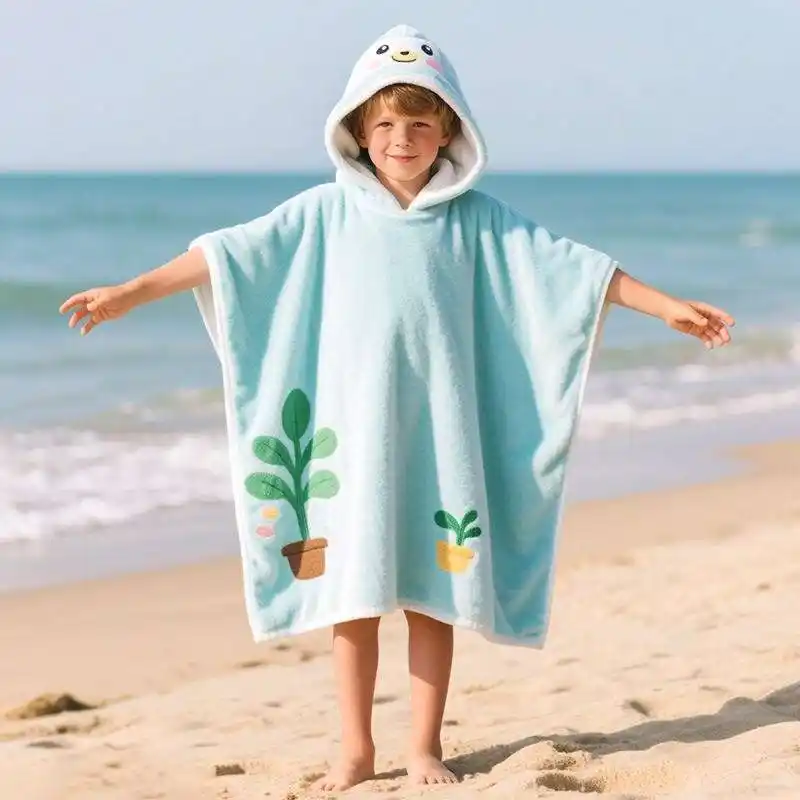
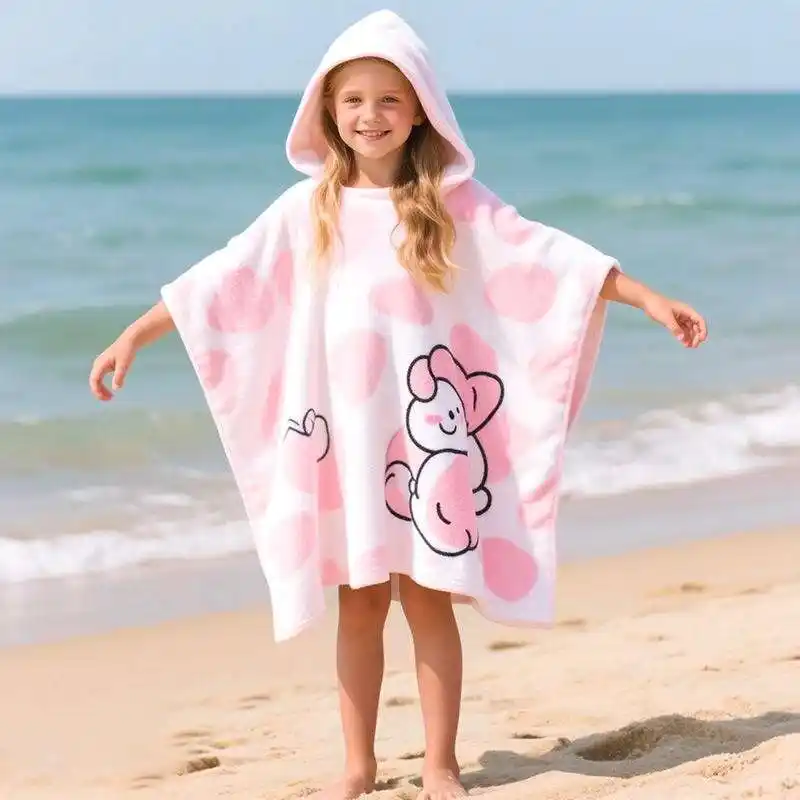
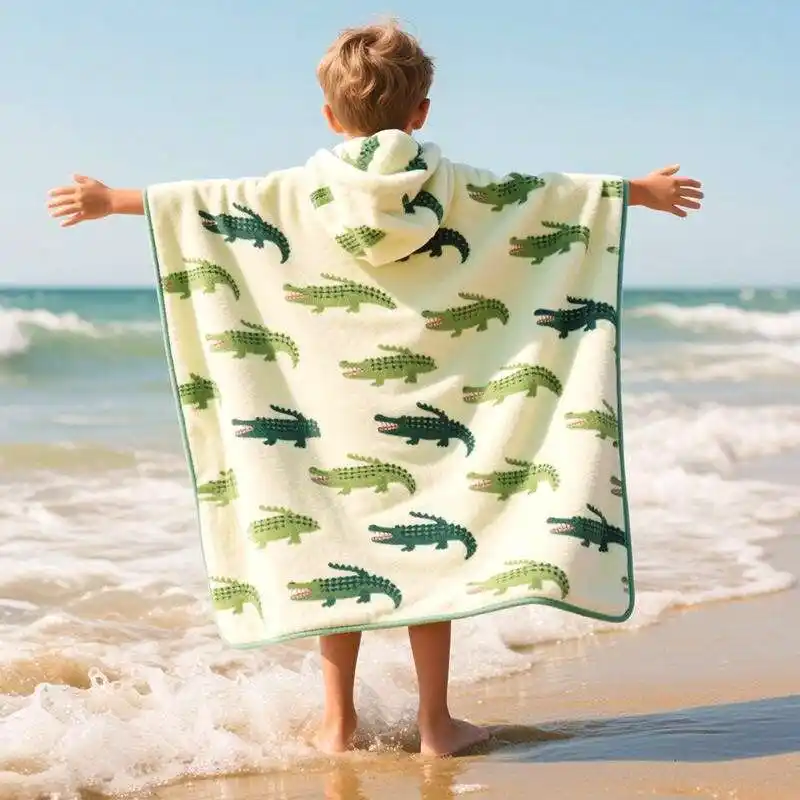
kids poncho towel” listings are built on lazy size charts and vague safety language. Here’s the measurable spec work—dimensions, hazards, and theme logic—that separates a repeatable SKU from a refund machine.
Most brands treat a kids hooded beach poncho like a cute print canvas, then act surprised when returns spike because the hood sits at the collarbone, the hem rides up like a crop top, and the “one size fits kids” claim collapses under basic measurements, laundering shrink, and real-world wriggly bodies. Want the uncomfortable truth?
I’ll say it plainly: if you don’t control the size spec, you don’t control your reviews.
So here’s how I’d reverse-engineer a poncho towel program that doesn’t self-destruct—starting from the actual spec pages in your own catalog, like the Kids Hooded Beach Ponchos collection, and then forcing the safety and theme decisions to earn their keep.
Table of Contents
The size chart that stops refunds
Two numbers matter more than your “age range” badge: body length (shoulder-to-hem) and body width (flat, across the torso). Add hood depth if you want to avoid the “hood falls off constantly” complaint.
I’m also going to drag GSM into the conversation because it predicts two things buyers pretend not to care about: warmth and dry time. Your own product inquiry forms even ask for “Size & GSM” for a reason—because you can’t price, ship, or QC a poncho without them, especially if you’re pushing full-color print like the Kids Hooded Beach Poncho With Custom Print.
Practical sizing, factory-style (cm + inches)
These are common manufacturing spec bands I’d use as a starting point for a kids poncho towel line (then lock them down by pre-production sample + wash test).
Size tier
Recommended child height
Body length (shoulder→hem)
Body width (flat)
Hood height
Notes I’d enforce
Toddler (2T–3T)
90–104 cm (35.4–40.9″)
55 cm (21.7″)
50 cm (19.7″)
28 cm (11.0″)
Keep arm openings higher; minimize excess fabric near knees
Kids (4–6)
105–120 cm (41.3–47.2″)
65 cm (25.6″)
60 cm (23.6″)
32 cm (12.6″)
Most “sweet spot” for swim lessons + beach
Kids (7–10)
121–140 cm (47.6–55.1″)
75 cm (29.5″)
70 cm (27.6″)
36 cm (14.2″)
Add coverage; watch weight (freight + dry time)
Hard opinion: Stop using age-only charts. Kids are not linear. Height is the least-bad proxy you’ll get without making parents measure shoulder-to-knee in a parking lot.
If you want to push “fits longer” as a value prop, do it honestly: increase length, not width. Width just turns into flappy fabric that drags in sand, catches wind, and makes kids hate wearing it.
Safety isn’t a “warning label.” It’s a design choice.
This part is not cute, but it’s real. And if you sell into regulated markets, it’s also lawsuit-shaped.
A hooded poncho can drift into “upper outerwear behavior” fast: playgrounds, buses, scooters, fences. Which means cords and drawstrings are the first thing I interrogate.
Health Canada’s 2023 assessment on children’s outerwear drawstrings reads like the postmortem nobody wants to write: cords can snag on playground equipment or vehicles and lead to strangulation or dragging incidents, and it points directly at ASTM drawstring criteria as the baseline expectation (Health Canada’s drawstring hazard assessment).
One case study that should embarrass the entire apparel ecosystem: the U.S. Consumer Product Safety Commission’s 2023 fast-track recall of Kindred Bravely bamboo nursing hoodies (Recall 23-149) told consumers to cut and discard the drawstring cords; those hoodies sold for about $75 and were made in China (CPSC recall notice).
“But those are hoodies, not towels.” Sure. And the mechanism of harm is still the same: a loop near a kid’s neck + snag point + motion.
My no-negotiables for a kids hooded poncho safety spec
No neck drawstrings. Not “shorter.” Not “tucked.” Not “decorative.” Just no.
No toggles (plastic or wood) anywhere near hood/neck. Small parts don’t need to be invited to the party.
No long external loops at waist/hem. If you insist on adjustability, use internal elastic or fully retracting systems.
Hood seam reinforcement: double stitch the hood attachment because kids pull on it like it owes them money.
Fabric behavior: if your line claims “quick-dry,” prove it with actual dry-time testing on the final GSM, not a lab swatch.
If you want the compliance story to be more than vibes, anchor it to documentation and traceability: link your spec choices back to your OEKO-TEX & GOTS sustainability documentation when you talk to buyers who’ve been burned by mystery-fiber supply chains.
UPF 50+ claims: the marketing trap buyers don’t price in
UPF is real. Misuse is everywhere.
Here’s the problem: a kids hooded beach poncho is often wet, and wet fabric can lose protection compared to dry fabric. The CDC is unusually blunt on this: tightly woven fabric protects better, and a wet shirt offers much less protection than a dry one (CDC Sun Safety Facts, updated July 2024).
So if you sell “UPF 50+ kids hooded beach poncho,” I’d want:
A lab report tied to the actual production fabric (not a “similar fabric” excuse).
A defined test method in your supplier paperwork (common methods include AATCC/ASTM frameworks).
A plain-language claim strategy: “UPF rating applies when dry” is less sexy, but it’s harder to attack.
And yes, this matters commercially: “UPF 50+” increases conversion, but it also increases the cost of being wrong.
Best-selling themes: what actually moves units
Themes aren’t art. They’re distribution logic.
If I’m designing a theme stack for kids poncho towels, I’m not asking “what’s cute?” I’m asking “what compresses into instantly recognizable silhouettes at 20 feet, on a beach, in a photo?”
That’s why animals win.
Your own merchandising taxonomy basically admits this: you separate Animal Character Hooded Towels from Cartoon Print Hooded Towels because they behave differently in the market. Animal shapes (shark fins, dinosaur spikes, bear ears) sell the product without reading. Cartoons rely on printing fidelity and licensing risk.
Here’s my blunt ranking of “best-selling themes” I’d bet on, with why:
Shark: high-contrast, gender-neutral-ish, the fin hood reads instantly, and kids self-identify with it.
Unicorn: still a monster performer; parents buy it as a “treat” item, not a utility towel.
Mermaid: strong for giftability; pairs well with pastel colorways and name personalization.
Space/astronaut: works when you have a strong print pipeline; less reliant on sculpted hoods.
Want to push family bundles? That’s not fluff; it’s AOV engineering. You already have a product pathway for that with the Kids Beach Poncho With Matching Family Set Option. Use it as a merchandising lever, not just a product page.
And packaging is not an afterthought. It’s margin protection. If you ship a plush poncho in a sad polybag, the unboxing looks cheap and your reviews will say it out loud. For retail-ready execution, point buyers to custom packaging options for private label ponchos and price it into the program instead of “surprising” them later.
FAQs
What size hooded poncho towel does my child need?
A kids hooded towel poncho size is best chosen by child height, then verified by body length and body width measurements, because age labels vary wildly across brands and factories; a good fit keeps the hem near mid-thigh, the hood stable on the head, and arm openings high enough for movement without tripping. After that, sanity-check the numbers: if your child is 110 cm tall, a 65 cm body length is usually safer than a “one size” guess. If you’re between tiers, size up for length but don’t let width balloon.
Are hooded beach ponchos safe for toddlers?
A toddler beach poncho is safest when it has zero neck drawstrings, no toggles or dangling attachments, and a hood that stays on without cords, because cords and loops can snag on playground equipment or vehicles and create strangulation or dragging hazards during normal kid behavior like climbing and running. I treat “decorative cords” as a red flag. If it dangles, it’s a snag risk. Period. If you’re sourcing, demand photos of the hood/neck area laid flat and confirm there’s no cord channel hiding inside.
Does a kids hooded beach poncho provide UPF 50+ sun protection?
A UPF 50+ kids hooded beach poncho is a garment whose fabric has been lab-tested to block most ultraviolet radiation under a defined method, but protection depends heavily on fabric construction, weave density, and whether the material is wet, stretched, or worn thin from use, which can reduce real-world performance. If you’re buying, ask for the test report tied to the exact production fabric and colorway, not a generic “UPF fabric” claim. And remember: wet fabric can protect less than dry.
What fabric is best: cotton terry vs microfiber for a kids poncho towel?
A kids poncho towel fabric choice is a trade-off between absorbency, dry time, print behavior, and weight: cotton terry typically feels plush and absorbs well but dries slower and weighs more at higher GSM, while microfiber tends to dry faster, print sharper in full color, and pack smaller, but can feel less “cozy” to some buyers. If your SKU is theme-first and photo-first, microfiber often wins. If your SKU is comfort-first and “post-pool warm,” cotton terry (with controlled shrink) wins.
What are the best-selling themes for kids hooded beach ponchos?
Best-selling kids hooded beach poncho themes are designs that read instantly at distance and photograph well—especially shark, unicorn, mermaid, dinosaur, and bold cartoon motifs—because parents shop visually, kids self-select characters fast, and repeat buyers reward “recognizable” silhouettes more than subtle prints. My hot take: sharks beat almost everything when you want broad appeal without licensing. Unicorns win gift occasions. Mermaids win when personalization is offered.
Conclusion
If you’re building (or fixing) a Kids Hooded Beach Poncho line, don’t start with artwork. Start with the spec.