Who Should Buy Sand-Free Microfiber Suede Towels? (Travel, Gifts, Events)
Sand-free microfiber suede towels aren’t for everyone. But for travel kits, branded gifts, and event giveaways, they can be the rare promo item people actually keep—if you buy them like a sourcing pro.
Sand gets everywhere. And that’s exactly why “sand-free” sells—because it targets a very specific pain point (mess, weight, drying time) while quietly dodging the real buyer question: will this towel still feel decent after 10 washes, and will anyone keep it once the novelty wears off? So who actually wins here?
Table of Contents
The blunt truth about “sand-free”
“Sand-free” isn’t magic. It’s surface physics.
Microfiber suede is low-pile, flat-faced fabric—less for grains to hook into, more for grains to slide off. That’s the whole trick. Loop terry cotton (the classic plush towel) is basically a sand trap. If you’re buying for beaches, cruises, festivals, or pool decks, that difference matters.
But here’s the hard part buyers don’t like hearing: “sand-free” towels can also feel less absorbent on first touch, because they don’t have the same loop structure as terry. They dry fast, pack small, and print beautifully. They’re not the cozy towel you steal from a resort cabana.
Who should buy a sand free beach towel
1 Travelers who pack like adults
If you’re building a carry-on kit, the quick dry microfiber travel towel is a rational choice: lower bulk, less funk, fewer damp-bag disasters. U.S. travel demand is still huge—U.S. Travel Association reports $1.3 trillion in travel spending (and $2.9 trillion in total economic output) in its 2024 impact data.
International visitors are spending hard, too—International Trade Administration reports $253.9B in U.S. travel/tourism-related spending in Jan–Dec 2024, up 12% vs 2023.
If you’re selling travel kits, or building a resort “welcome bag,” the product logic is simple: lightweight packable beach towel + fast dry + decent feel.
2 Gift buyers who want “photo-ready,” not “spa plush”
Three words: print quality matters.
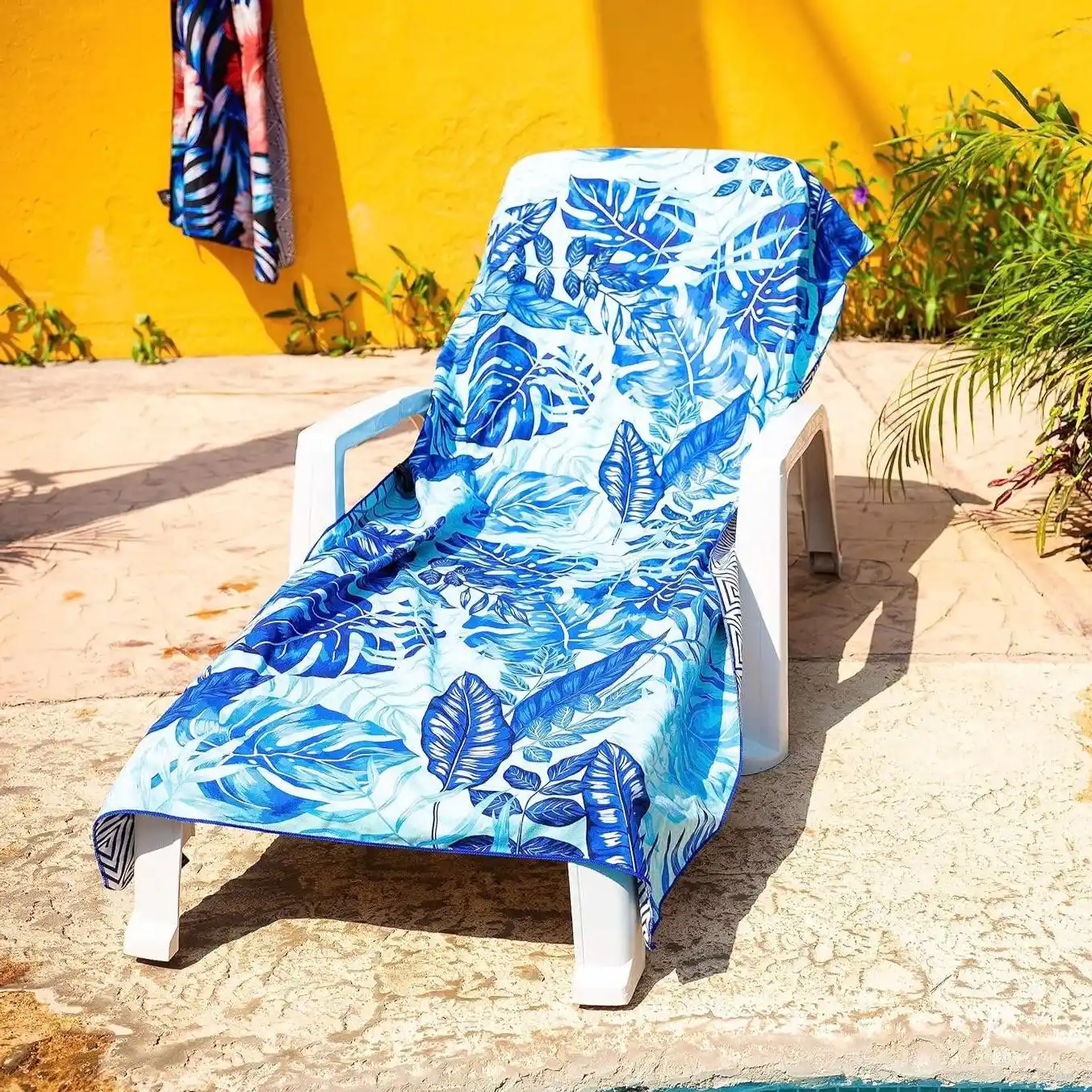
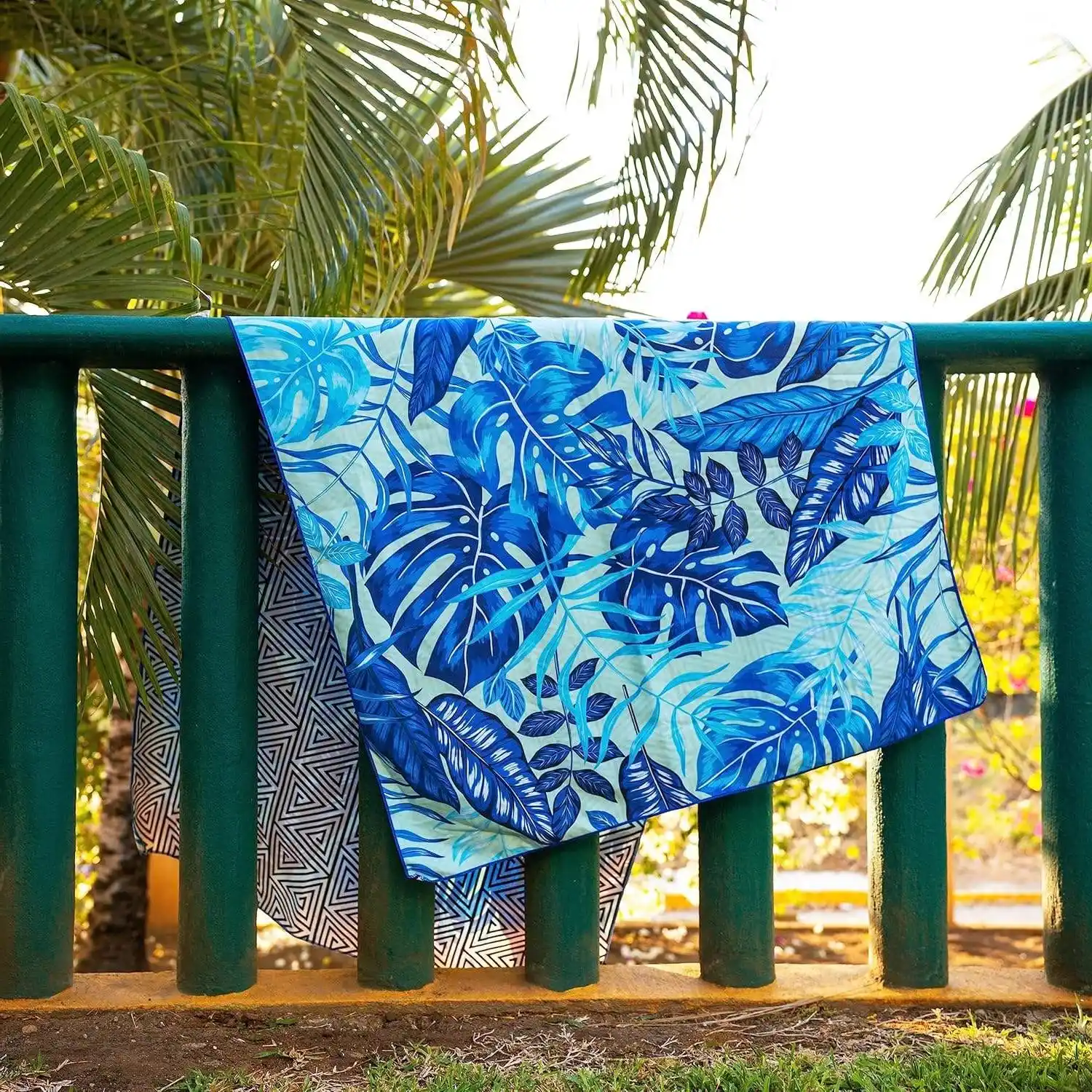
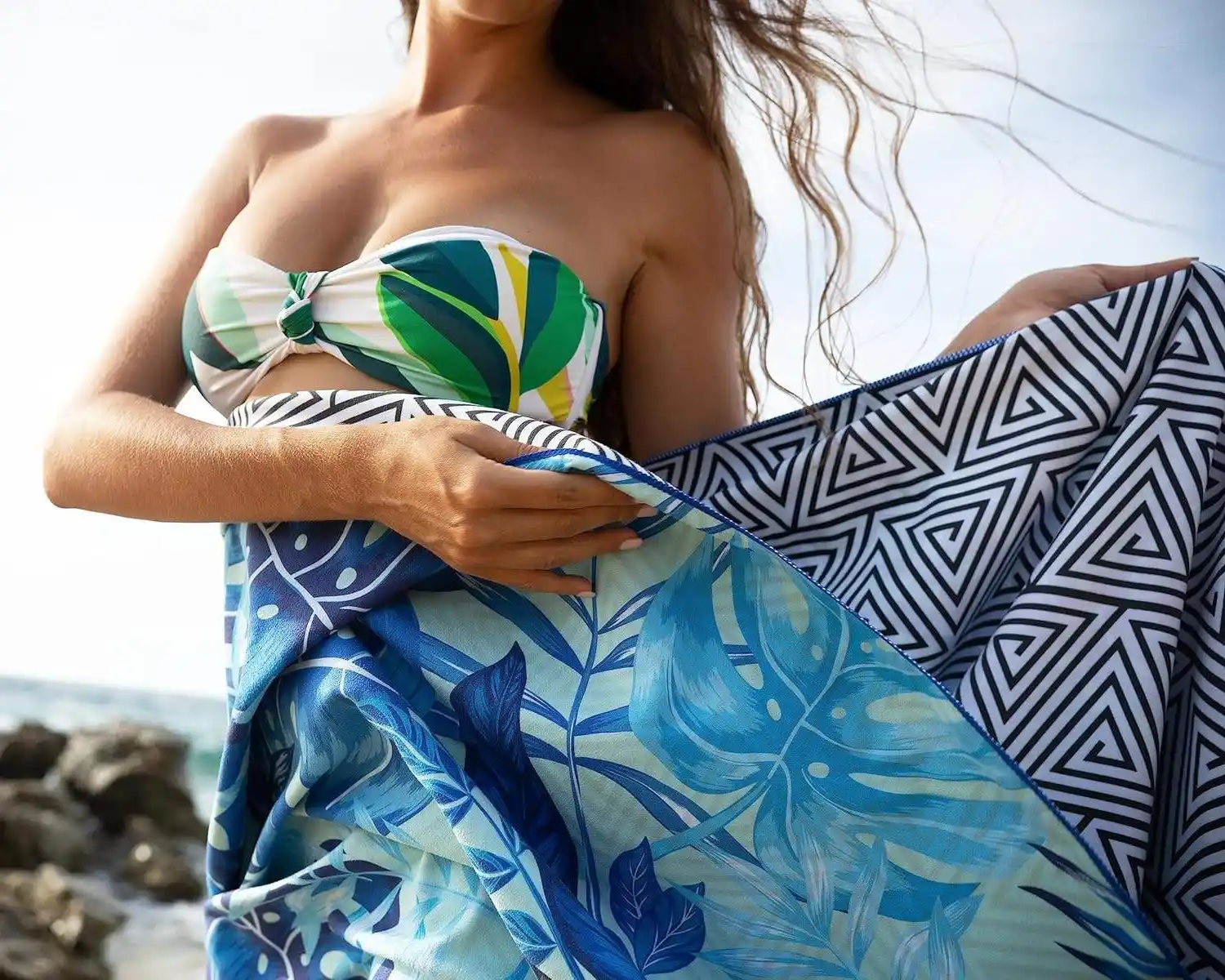
Microfiber suede is basically a canvas for dye-sublimation. Logos look sharp, gradients don’t break, and the towel photographs clean—huge for influencer trips, cruise groups, swim clubs, and beach clubs that want their branding in the frame. The product page language even leans into that “smooth, photo-ready logo results” positioning. Sand-free microfiber suede towel with logo
If you’re building a premium gifting program, don’t ignore packaging—because “gift” without packaging is just bulk merch pretending. The practical route: custom packaging options for towels
3 Event and corporate buyers who are tired of trash giveaways
Most event swag is landfill-bound within a week. I don’t say that to be dramatic; I say it because you can predict it by item category: cheap tote, cheap pen, cheap stress ball.
Towels are different. They’re used. They’re visible. And the U.S. promo industry is still expanding—Promotional Products Association International reports 2024 sales up 2.63% to $26.78B (from $26.09B in 2023).
That’s your macro signal: budget is there. The micro question is execution. If you’re doing promotional beach towels for events, your success is mostly determined by:
The part nobody wants to talk about: microplastics and compliance
Microfiber is plastic. Usually polyester (PET, repeating unit roughly (C10H8O4)n) and sometimes blended with polyamide/nylon (often nylon 6,6, (C12H22N2O2)n). If you’re buying at scale, you’re buying a material with a regulatory and reputational shadow.
A 2024 peer-reviewed study on microfiber release from synthetic textiles during washing found shedding is influenced by fabric construction and basis weight, with notable differences by fiber type and structure.
And regulators are moving—sometimes in ways marketers misunderstand on purpose. The European Chemicals Agency notes the European Commission adopted a REACH restriction on intentionally added microplastics on 25 Sept 2023; importantly, the Commission’s explainer also clarifies “articles are not in the scope” for that restriction’s core definition.
Separate issue, different headache: PFAS restrictions in textiles and “fabric treatments.” Minnesota passed PFAS-related consumer product laws in 2023, and its statute sets phased prohibitions for intentionally added PFAS in certain categories. If you’re selling into states tightening PFAS rules, you want to be very clear what (if any) finishes are on the fabric.
So yeah—sand-free can be “worth it,” but only if your sustainability story doesn’t collapse the second a procurement person asks, “What’s the fiber, what’s the finish, what’s the documentation?”
Here’s the checklist I’d force into any RFQ (and I’m not apologizing for the tone):
Size: 70×140 cm (travel), 80×160 cm (standard), 90×180 cm (oversized). Don’t let suppliers “suggest” smaller without telling you.
GSM: microfiber suede often lands around 200–250 GSM for a sane balance of packability vs feel. Lighter can feel cheap; heavier can feel slow to dry.
Blend: common performance blend is 80/20 polyester/polyamide; pure PET can be slicker and less “grabby.”
Print method: dye-sublimation for full color; understand that it behaves differently than printing on cotton terry.
Edge finish: stitched hems vs overlock; hems matter for fraying complaints.
Packaging: polybag + insert card vs belly band vs gift box; decide based on channel, not aesthetics.
Microfiber suede vs cotton terry vs “other”
Attribute
Microfiber suede (sand-free style)
Cotton terry
Waffle/other quick-dry
Sand performance
High (shakes off)
Low (traps sand)
Medium–High
Dry time
Fast
Slow–Medium
Fast
Bulk/packability
Low bulk
High bulk
Low–Medium
Print quality
Excellent (photo-ready)
Variable
Good
“Luxury feel”
Medium (smooth)
High (plush)
Medium
Best use
Travel, gifts, events
Resorts, home, plush buyers
Fitness, travel, minimalist kits
FAQs
Are sand-free microfiber towels worth it?
A sand-free microfiber towel is a low-pile synthetic towel (usually polyester or polyester/polyamide) designed so sand grains don’t hook into loops, making it easier to shake clean and pack dry; it’s “worth it” when portability and print clarity matter more than plush cotton feel. If you’re traveling, doing cruise kits, or running branded events, the keep-rate is higher because it’s usable. If you want spa comfort, buy cotton terry and accept the sand.
What’s the best sand free beach towel for travel?
The best sand free beach towel for travel is a microfiber suede or similar quick-dry microfiber towel sized for carry-on packing (often 70×140 cm or 80×160 cm) with a midweight GSM that dries fast yet doesn’t feel paper-thin, ideally paired with a pouch or band for packing. If you’re selling travel retail, look at travel & souvenir towel programs and avoid ultra-light “souvenir trash” that pills after a few trips.
Can I add a custom logo to a microfiber suede beach towel?
A custom logo microfiber suede towel is a sand-resistant towel made with a smooth face suitable for crisp branding—typically using dye-sublimation for full-color artwork—so the logo reproduces cleanly without heavy ink feel, which is why these towels are popular for cruises, beach clubs, and event giveaways. The most direct fit on your site is the sand-free microfiber suede beach towel with logo .
Do microfiber towels shed microplastics?
Microfiber towel shedding is the release of tiny synthetic fibers (microplastics) from polyester or polyamide textiles, especially during washing and abrasion, and research shows shedding varies by fabric structure, basis weight, and fiber type—meaning some “better” towels still shed, just differently. If you’re making sustainability claims, read the science and write your care instructions like you mean it. Study on microfiber release during washing
What should event buyers demand before ordering promotional beach towels?
A promotional beach towel spec is the minimum set of measurable requirements—size, GSM, fiber blend, print method, edge finish, packaging, and delivery timeline—that forces suppliers to quote the same product instead of swapping quality after approval, which is where most “event disasters” originate. Use promotional & corporate gift towel options , add custom packaging requirements , and route execution through an OEM/ODM workflow if you’re doing real volume.
Conclusion
If you’re buying for travel retail, gifting, or an event and you want a towel people keep, don’t start with “sand-free.” Start with specs, artwork method, packaging, and delivery reality. Then choose the material.
Use the product/category shortcuts that match your channel: