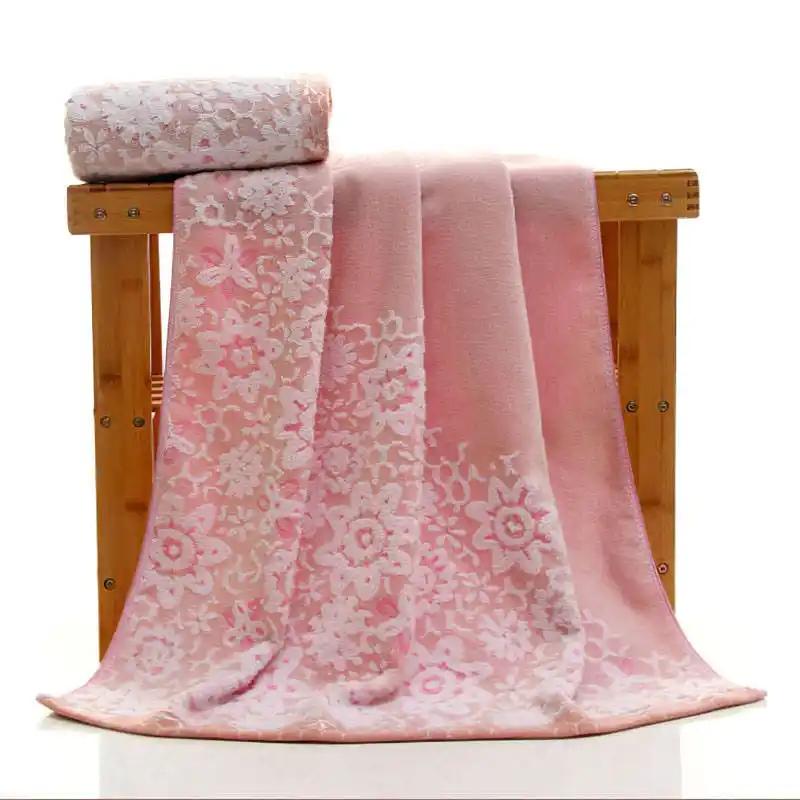
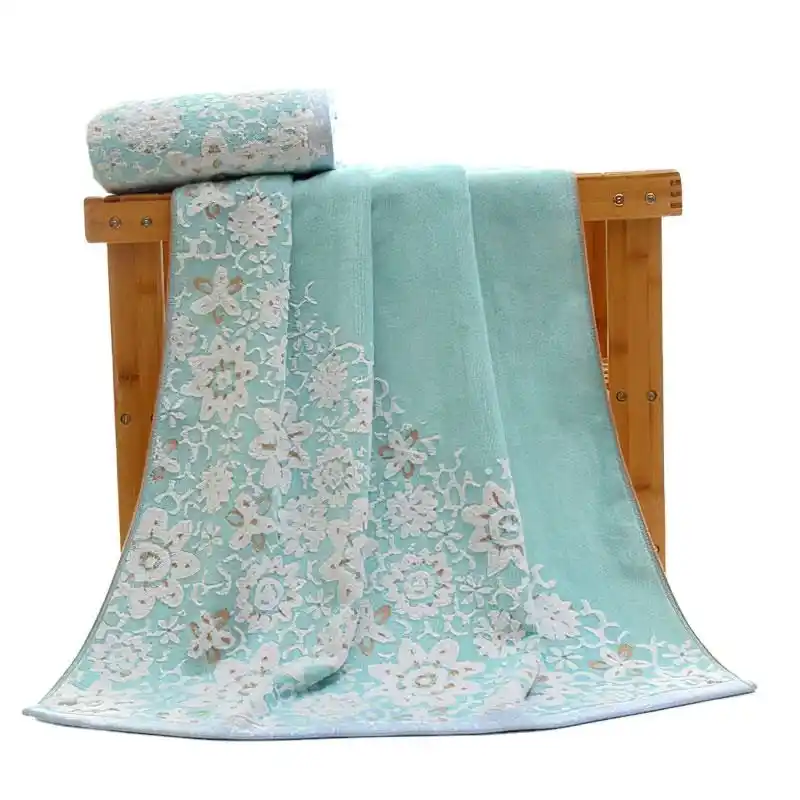
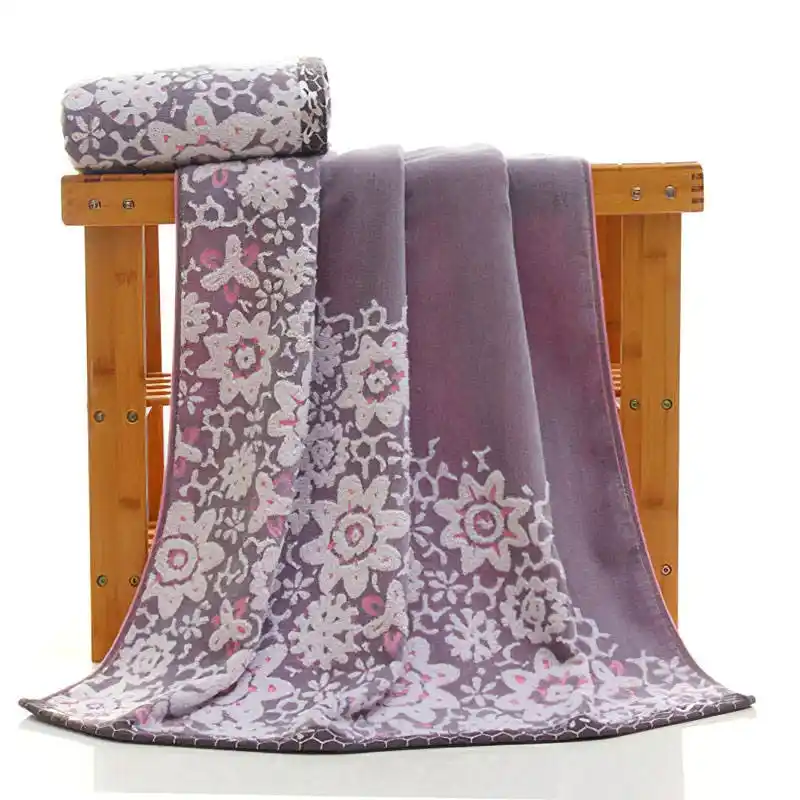
Jacquard towels aren’t “luxury” by accident; the loom bakes in texture and branding that printing and cheap embroidery can’t match. Here’s the spec-level truth on durability, handfeel, and why woven logos sell.
Jacquard doesn’t win because buyers are romantic about “craft”; it wins because the loom hard-codes pattern into the towel’s fabric geometry, so the surface reads richer in light, the handfeel stays consistent after wash, and the logo doesn’t turn into a blurry memory the first time chlorine and friction show up.
So why do brands still treat jacquard as “nice-to-have” instead of margin insurance?
I’m going to say the quiet part out loud: most “luxury bath towels” (and plenty of “premium” beach programs) are marketing wrapped around average specs. Jacquard towels—especially jacquard terry towel constructions—are one of the few places where the premium claim can be mechanically true, not just priced true.
If you want the product context, start with the manufacturer taxonomy on the site: their jacquard beach towels lineup is literally framed around woven pattern + repeatable QC, which is the right framing for buyers who get punished by returns and reorders.
Most people describe textured cotton towels like they’re judging a sweater. Wrong mental model. A towel is closer to a small abrasion machine: loops, pile height, and yarn path determine how it feels today and how it looks after 30 washes.
Jacquard weave towels feel “premium” for three reasons that sourcing teams can measure:
Light/dark patterning comes from structure, not ink. A jacquard pattern often shows because pile height and yarn exposure differ across the motif. That makes it look intentional on a lounge chair, not like a printed billboard.
The handfeel is distributed. Prints can create a flat “skin” (especially heavy pigment). Embroidery creates localized stiffness and pulls. Jacquard spreads the tactile effect across the surface.
The towel “reads” from distance. That’s the dirty secret of woven logo towels: brand recognition isn’t only about sharp edges; it’s about high-contrast shapes that survive glare, sunscreen, and sand.
If you want a clean example of how sellers position this, look at this product page: custom jacquard beach towel with woven logo pattern. Notice the pitch: “built into the towel, not laid on top.” That’s not poetry; that’s a durability claim hiding in plain sight.
Durability is where jacquard earns its keep (and where suppliers lie)
Here’s the hard truth: jacquard can be worse than plain terry if the mill pushes long floats, cheap yarn, or sloppy finishing. Snagging happens. Loops pull. The “premium” towel starts shedding like a stressed animal.
So I care less about the word “jacquard” and more about the inputs:
GSM (grams per square meter): For premium feel, buyers typically live in the 400–650 GSM band for bath towels; for beach towels, you’ll see more variance depending on velour/shearing and drying speed targets. Too low feels thin; too high can dry slow and mildew in humid programs.
Yarn quality metrics: Fiber strength and length affect yarn breakage and pilling risk, which show up later as fuzzing and loss of definition.
Chemical reality: Hotel/resort laundering isn’t gentle. Think oxidizers like sodium hypochlorite (NaOCl) in some systems, or peracetic acid (CH₃CO₃H) in others. A towel that “passes” a home wash is not the same towel that survives commercial abuse.
This is where I like bringing in boring government data, because it kills hand-wavy sales talk. The USDA Agricultural Marketing Service publishes classing information tied to measurable fiber properties like average length (inches) and fiber strength (g/tex). In a USDA weekly classing report for the week ending Dec 26, 2024, average fiber length values cluster around ~1.09–1.18 inches depending on office, and fiber strength is explicitly tracked in grams per tex—the kind of metric that actually maps to yarn performance, not vibes.
And yes, quality gets priced. Texas A&M AgriLife Extension Service breaks down how classing parameters (length, strength, micronaire, color, leaf/trash) translate into real premiums/discounts in the U.S. loan schedule context—base rate cited at $0.52/lb for upland cotton, with premiums tied to better classing outcomes. That’s not “towel data,” but it’s upstream proof that measurable fiber properties are monetized, because they matter downstream in textiles.
So when a supplier claims “durable jacquard,” my response is: show me the spec and the test method. If they can’t talk about yarn system, loop geometry, and shrinkage/torque control, they’re selling you adjectives.
Brand recognition: woven logos are legal risk management disguised as design
Brand teams love woven logos because they’re harder to degrade—and harder to copy cleanly without looking like a cheap knockoff.
But the legal side matters more than most merch people admit. The minute your towel becomes a “source identifier” (logo towel, signature pattern, recognizable motif), you’re not just buying fabric. You’re buying trademark exposure.
Supreme Court of the United States made this painfully clear in trademark context: when a mark is used as a designation of source, traditional infringement frameworks apply rather than getting waved away as “expression.” The Court’s 2023 opinion in Jack Daniel’s Properties, Inc. v. VIP Products LLC (PDF) is about a parody dog toy, but the lesson generalizes: if your product uses marks to sell, courts take confusion and dilution seriously.
Then there’s cross-border reality. A lot of towels are made outside the U.S., sold into the U.S., and marketed globally. The Court’s 2023 decision in Abitron Austria GmbH v. Hetronic Int’l, Inc. (PDF) tightened how far certain Lanham Act provisions reach extraterritorially—again, not “towel law,” but directly relevant to how brands think about enforcement when sourcing and selling across borders.
Translation for towel buyers: woven logo towels aren’t just prettier. They’re a cleaner, more consistent brand signal that reduces the temptation to “fix it in print” later (which often creates mismatched marks, sloppy color, and compliance/label chaos).
If you’re building a premium program, you can’t separate towel construction from packaging and retail execution. That’s why I’d pair jacquard decisions with packaging discipline: custom packaging options for private label towels should be treated like part of the product spec, not an afterthought.
Jacquard vs embroidered vs printed: what buyers miss
Most buying debates are fake because they compare “looks,” not failure modes. Here’s the version procurement people actually need.
Attribute that matters
Jacquard (woven-in)
Embroidery (stitched-on)
Print (on surface)
Texture & perceived value
High—pattern creates dimensional handfeel
Medium—premium only where stitched
Variable—can look premium, often feels flatter
Durability of branding
Strong—logo is structural
Can be durable, but thread pulls + stiffness
Risk of fading/cracking depending on method
Comfort against skin
Even feel across surface
Raised areas can feel scratchy/stiff
Smooth but can feel “coated”
Failure mode
Snags/loop pulls if floats are long
Thread fray, puckering, distortion
Wash fade, abrasion loss, handfeel degradation
Best use case
Signature woven logo towels, resort retail, heritage motifs
Small logos, monograms, controlled placement
Photoreal art, big color fields, promo graphics
If your decision is still “jacquard vs embroidered towels,” stop and ask: are you optimizing for brand visibility at 10 feet, or for softness at 10 inches? Those are different products.
What is a jacquard towel? A jacquard towel is a towel whose pattern (including logos) is formed by controlled yarn lifting on a jacquard loom, meaning the design is woven into the fabric structure rather than printed on the surface or stitched afterward, producing durable motif definition and a naturally textured handfeel.
After that definition, the practical takeaway is simple: the pattern survives abrasion better because it’s part of the weave, but only if yarn quality and float control are done right.
Do jacquard towels last longer than embroidered towels? Jacquard towels generally last longer in appearance because the motif is structural and won’t crack or peel, while embroidered towels can last longer in localized branding if stitch density and backing are correct—yet they often fail via thread fray, puckering, or stiffness that accelerates wear in the stitched zone.
If your towel is washed hard (hotel/resort), jacquard usually ages more evenly; embroidery often ages in patches.
Are woven logo towels better for brand recognition? Woven logo towels are better for brand recognition because they create consistent, repeatable contrast and shape at distance, and their marks stay legible after laundering since the logo is built into yarn geometry rather than relying on surface ink layers or stitch outlines that can distort over time.
If your brand is photographed (pool decks, beach clubs), woven-in marks are basically free marketing that doesn’t wash away.
What GSM feels premium for jacquard towels? A premium-feeling jacquard towel usually sits in a GSM range that balances plushness and drying performance—commonly around 400–650 GSM for bath programs and a wider band for beach programs depending on velour/shearing—because GSM interacts with loop height, yarn size, and absorbency rather than acting as a standalone quality score.
Ask for GSM and construction details; GSM alone is easy to game.
How can I verify durability claims before I place a bulk order? Verifying jacquard towel durability means requiring objective test conditions—wash-cycle counts, shrinkage targets, colorfastness standards, snag/pull resistance protocols, and documented yarn/fiber inputs—so you’re evaluating repeatable performance under defined laundering chemistry and abrasion rather than trusting showroom feel and a one-off sample.
And yes: demand pre-production approval samples and keep them as a control for the first shipment.
If you want, I can also map this into a procurement checklist (GSM + yarn system + tolerance bands + wash tests) so your “premium” claim survives contact with real laundry.