Round Beach Towels for Merch & Resorts: When Circular Beats Rectangular
Rectangular towels still run housekeeping. But round beach towels often beat them in resort retail, beach club merch, and VIP gifting because they sell the brand before they dry the guest.
This is the buying guide I wish more operators read before they burn budget on the wrong SKU.
I’ve watched too many resort teams buy towels like they were buying bleach, then act surprised when the shop stays flat, the merch table looks dead, and the “premium” arrival gift lands with all the charisma of a minibar price list; the hard truth is that round beach towels are not linen-program replacements, they are visual products, and visual products obey different math. Why keep treating a branded towel like silent inventory?
Here’s the setup I trust. According to UN Tourism’s May 2024 update, international tourist arrivals reached 97% of pre-pandemic levels in Q1 2024. At the same time, Reuters reported on Marriott that it expected 2024 RevPAR growth of 3% to 5% after 14.9% in 2023, and Reuters reported on Hilton that it expected 2% to 4% after 12.6% in 2023. Translation: travel came back, but easy hotel growth cooled, which means every branded object on-property has to work harder. A round towel can do that work because it behaves like merch first and textile second.
That distinction matters.
When I say round beach towels beat rectangular towels, I do not mean they absorb better, fold faster, or fit every lounger. I mean they win where resorts actually make emotional margin: boutique retail, cabana upsells, influencer gifting, beach club drops, wedding welcome packs, and the kind of “take me home” product that guests photograph before they ever use it. Isn’t that the real job in merch?
The site architecture at customtowelsbeach.com already hints at the right strategy, even if most buyers still miss it: the round beach towel collection sits naturally beside resort & hotel towels and retail & private label towels, which tells me the category should be sold as a bridge between operations and retail rather than as some novelty add-on. That is smart. It mirrors how real buyers split budgets in the wild.
Photos matter.
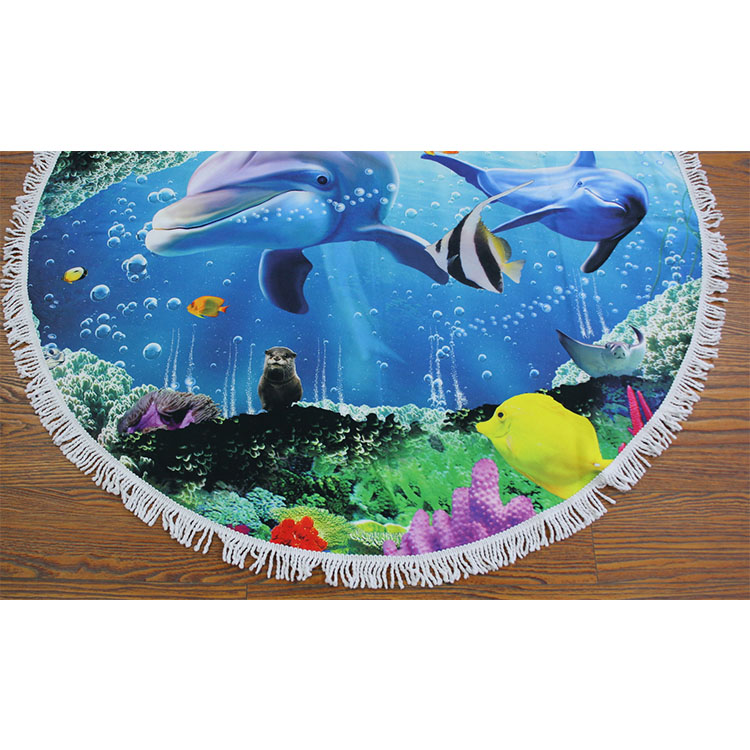
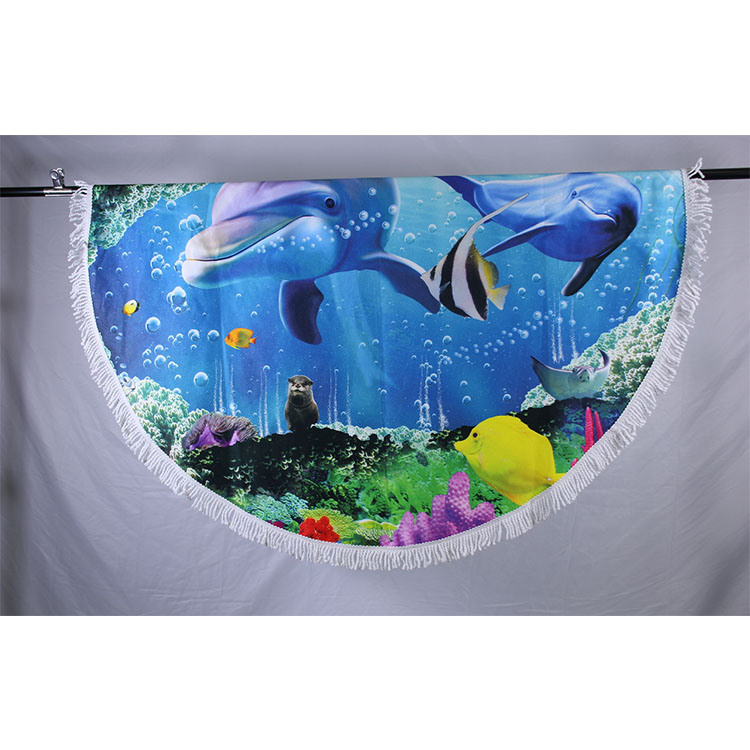
According to Pew Research’s January 2024 survey, 47% of U.S. adults use Instagram. So when a resort buys a circular towel with a full-coverage print, a 150 cm to 180 cm diameter, and a strong center composition, it is not buying “cute.” It is buying a prop that reads cleanly from above, frames two people instead of one, and makes the logo feel intentional instead of stamped on as an afterthought. Why would a merch manager ignore a format built for overhead photography?
My opinion is blunt: rectangular towels are still better when the metric is throughput. You can stack them faster. You can fold them faster. You can cover more body length on a lounger. Housekeeping likes them for good reasons, and I’m not here to insult operations people who have to process 300 pieces before lunch. But if the metric is perceived value, circular usually wins, because a round silhouette looks customized even before the artwork starts.
That is the trick.
A rectangle has to rely on color, weave, embroidery, or brand equity to feel special. A circle begins special. That shape change alone shifts the guest’s read from “property supply” to “branded item.” I’ve seen ordinary art look expensive on a circle and expensive art look forgettable on a rectangle. The industry hates admitting this because it sounds superficial. It isn’t. It is merchandising.
Cotton round towels win when touch matters, when the guest is paying real money in a resort shop, or when the property wants a welcome gift that feels soft, not synthetic. Microfiber round towels win when print sharpness, drying speed, weight, and freight efficiency matter more than plushness. And if your team keeps arguing about which is “best,” you’re probably mixing channels. Resort amenity, retail merch, and promo giveaway are not the same brief.
Where circular wins, where rectangular still holds the line
I don’t buy the lazy claim that one shape is universally better. That’s buyer folklore. The better question is whether the towel is meant to be laundered like infrastructure or sold like identity.
Use case
Best shape
Spec I’d start with
Why it wins
Where it loses
Resort gift shop hero SKU
Round
160–180 cm, cotton terry, 380–450 GSM
Big visual read, higher perceived value, easier premium storytelling
Higher fold volume, slower back-of-house handling
Beach club merch drop
Round
150–170 cm, microfiber or velour-face print
Strong center art, better social photos, easier branding
Less efficient for chair coverage
VIP arrival gift
Round
150–160 cm, cotton or microfiber, private-label hangtag
Feels deliberate and collectible
Unit economics can look rich if you spec too heavy
Daily pool deck linen
Rectangular
30″×60″ to 40″×70″, cotton terry, 450–600 GSM
Better body coverage, faster folding, simpler storage
Weak retail energy
Cabana rental rotation
Rectangular or mixed
Rectangular base + round upsell SKU
Operations stay sane while merch stays visible
Requires split inventory discipline
Event giveaway / travel kit
Round
150 cm microfiber, lighter packable build
Easy to carry, prints loudly, giftable
Not the plush luxury feel some hotels want
My buying rule is simple. If the towel’s job is to disappear into operations, stay rectangular. If its job is to get photographed, gifted, or sold, circular usually pays back the complexity.
The spec sheet that separates smart buyers from people who reorder in anger
Three numbers decide whether round beach towels succeed: diameter, GSM, and artwork discipline.
First, diameter. A 150 cm round towel is usually enough for branded giveaways, beach club retail, and travel-friendly assortments. A 160 cm to 180 cm towel feels more like a flagship piece, especially when you want a strong center medallion, border storytelling, or a logo lockup that reads from six feet away. Go too small and the shape loses drama. Go too large and your ops team starts muttering, which, in my experience, is usually a sign they’re right.
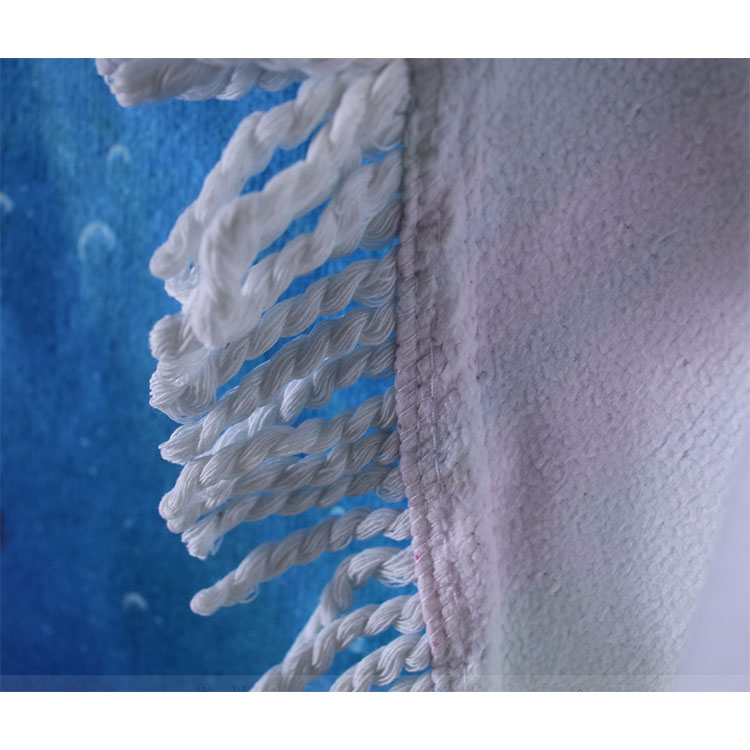
Second, weight. For microfiber, I’d usually start around the lighter promotional end and move up only when the hand feel truly matters. For cotton, I’d rather buy honest absorbency and reliable edge construction than chase bloated GSM claims that collapse after repeated washing. Buyers get seduced by numbers. Guests notice feel and finish.
Third, composition. Round towels punish bad design. A rectangular layout dropped into a circular format looks amateur, fast. The center has to be intentional. Borders need breathing room. Logos should be scaled for overhead read, not just chest-level read. This is why full-color printed round products work so well when the art is built for the circle, not merely cropped into it. The site’s round category and product pages are already leaning into that “full-coverage artwork” logic, and that is the right instinct. (Custom Towels Beach)
The legal part nobody enjoys, and everybody remembers after the complaint arrives
This matters.
If you’re doing branded beach towels for merch, you need clean rights to the logo, the artwork, the destination marks, and any parody concept that borrows from a third-party brand. The cleanest reminder is the U.S. Supreme Court’s June 8, 2023 opinion in Jack Daniel’s Properties v. VIP Products, which made it much harder for a commercial product to hide behind a casual “it’s parody” shrug when the trademark is functioning as a source identifier. Resort merch teams love cleverness. Legal departments love paper trails. Guess which one survives litigation.
And then there’s compliance, which is less glamorous and more expensive when ignored. The site’s inquiry flow explicitly references certificates and audit frameworks such as Oeko-Tex, BSCI, Sedex/SMETA, and GRS for RPET programs. Good. That is not brochure fluff. If you are selling into a serious resort group, especially across the U.S., EU, or Australia, you want those conversations before sampling, not after carton marks are printed and hangtags are already wrong.
So yes, I like round beach towels. But I like them for disciplined reasons: stronger visual geometry, better merch psychology, more premium presentation, and cleaner differentiation in a sea of rectangular sameness. I do not like them when a buyer expects them to replace the entire pool deck program. That is how good ideas get blamed for bad briefs.
FAQs
Are round beach towels better than rectangular for resorts?
Round beach towels are circular-format towels, usually 150 cm to 180 cm in diameter, built to maximize artwork visibility, gifting appeal, and social-photo performance, while rectangular towels are linear-format towels optimized for chair fit, body coverage, folding speed, and bulk laundry handling across daily resort operations. For resorts, that means round wins in retail shops, beach clubs, VIP gifting, weddings, and branded experiences; rectangular still wins for the housekeeping base program. I would not force one SKU to do both jobs unless the property enjoys self-inflicted confusion.
What size and GSM should a resort choose for round beach towels?
A resort round beach towel spec is the combination of diameter, fabric, and weight that matches the channel, with 150 cm working well for promo and travel-oriented programs, 160 cm to 180 cm fitting premium retail and gifting, and GSM chosen for feel, drying speed, and freight tolerance rather than vanity. My practical rule: lighter, print-forward microfiber for events and packability; fuller cotton terry for resort shops and arrival gifts. And don’t buy by GSM alone. Edge construction, shrink behavior, and print discipline can wreck a “premium” towel faster than a spreadsheet can save it.
Are custom round beach towels better in cotton or microfiber?
Cotton round beach towels are absorbent, softer-feeling, and better suited to premium resort gifting and higher-touch retail, while microfiber round beach towels are lighter, faster-drying, more print-friendly, and often better for full-color art, travel kits, festival-style merch, and freight-sensitive programs where bulk becomes a real cost. I’d choose cotton when the guest will judge the towel with their hands first. I’d choose microfiber when the guest will judge it with their eyes first. Most merch mistakes happen when teams forget which judgment comes first.
How do resorts avoid legal and compliance mistakes on branded beach towels?
Resort towel compliance is the process of confirming artwork ownership, trademark permissions, labeling accuracy, and factory documentation before production, usually including brand-use approvals, care-label checks, carton-mark alignment, and supplier certifications or audit frameworks such as Oeko-Tex, BSCI, Sedex/SMETA, or GRS when the program requires them. On the legal side, get written permission for every mark and don’t get cute with parody just because the merchandising team is feeling witty that week. On the production side, lock specs before sampling chaos begins. That order saves money.
I’d build this program in two lanes, not one: keep rectangular towels for the laundry machine, and let round beach towels handle the camera, the gift shop, and the margin. If the goal is branded visibility with fewer forgettable SKUs, start with one cotton round hero piece, one microfiber round print piece, and a private-label packaging brief that treats the towel like merch, not maintenance.